
Throwback Thursday: Rediscovered Springs
Two Additional Springs Discovered Along the Northridge Trail Spark Curiosities


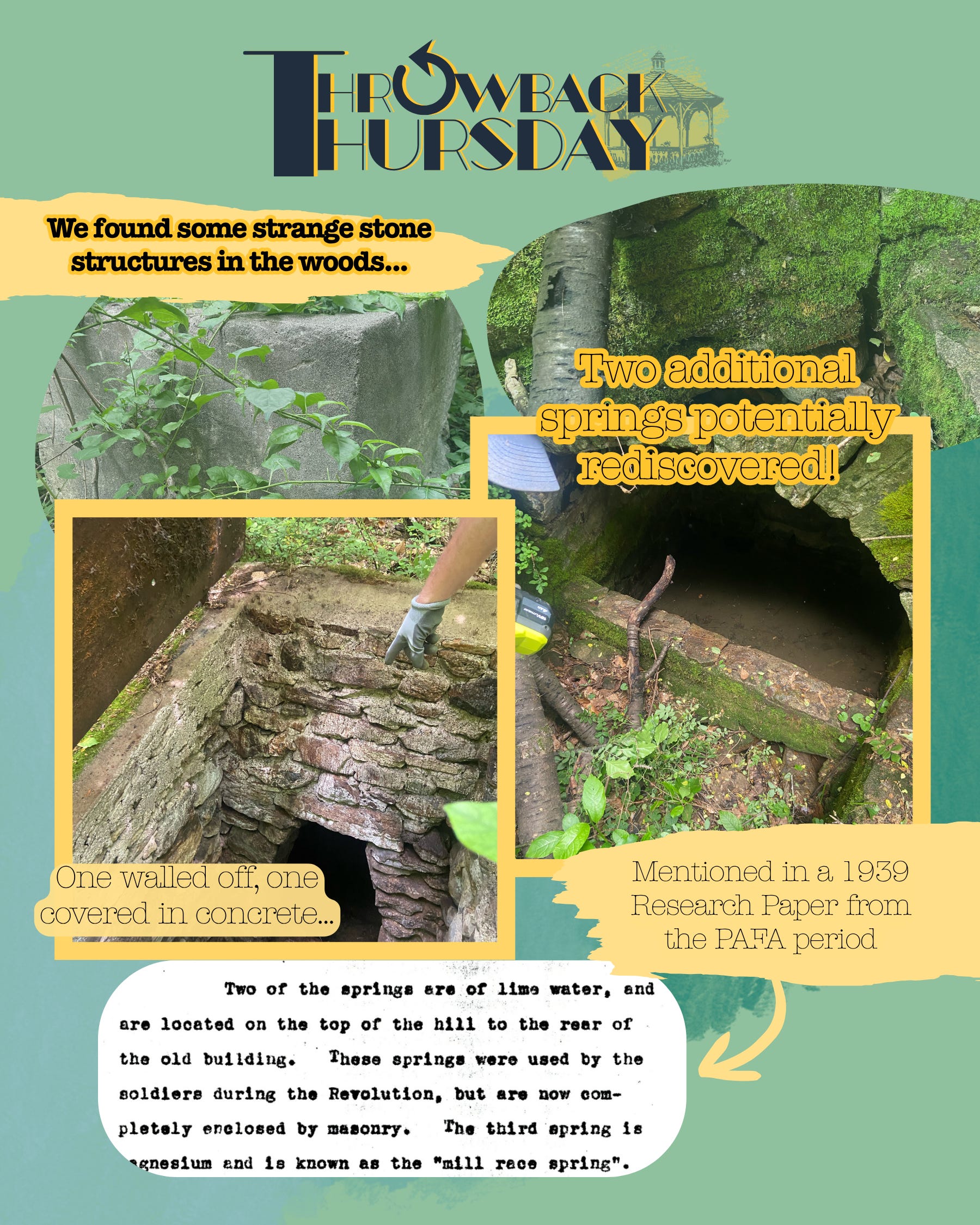
The Discovery
Back in June, our Facilities Manager, Kevin McCraw, discovered something curious while exploring the Northridge Trail, which winds along the large hill on the Historic Springs campus. Through the overgrown plants that compose the areas off the trail, he noticed something odd.
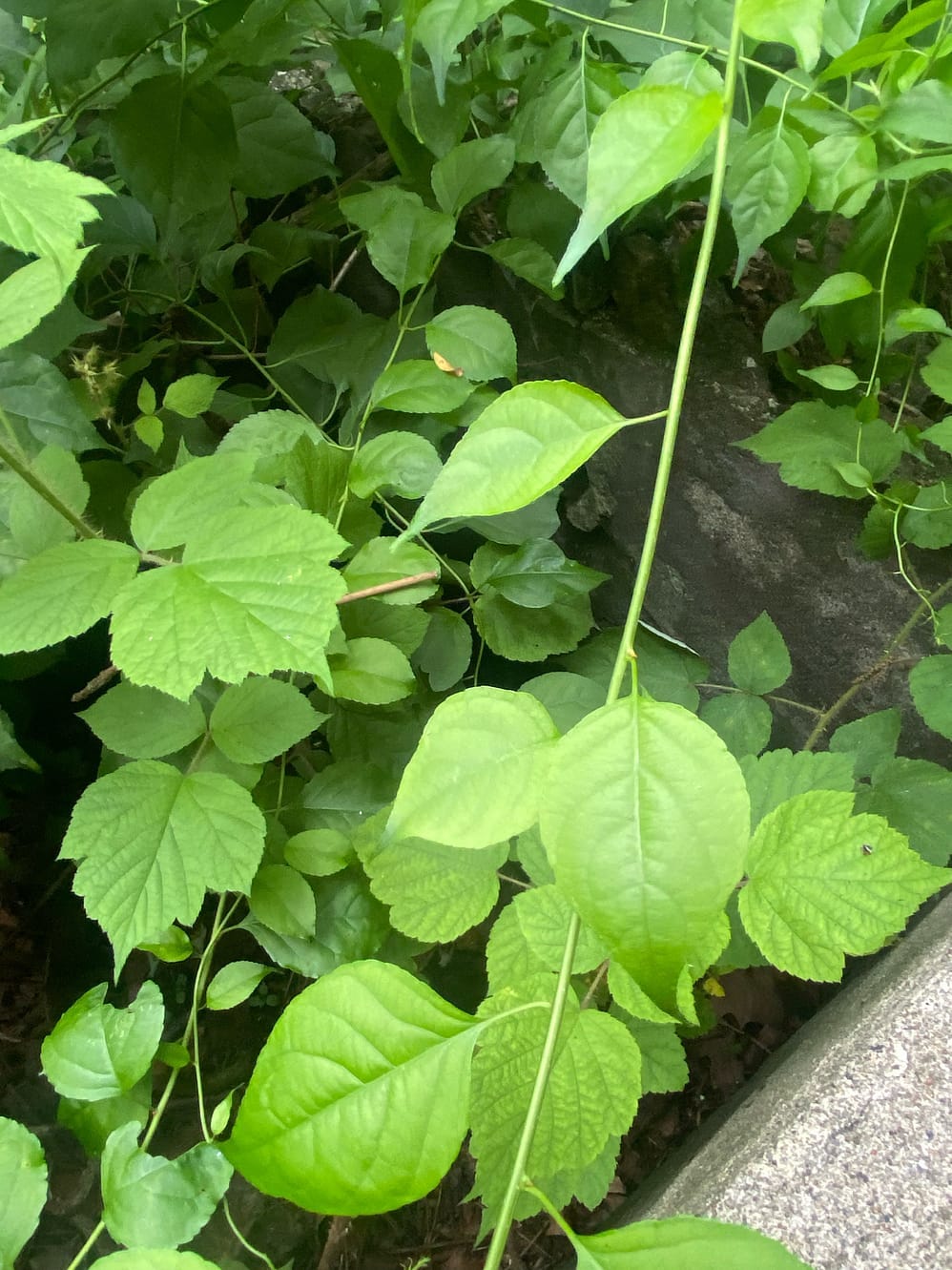
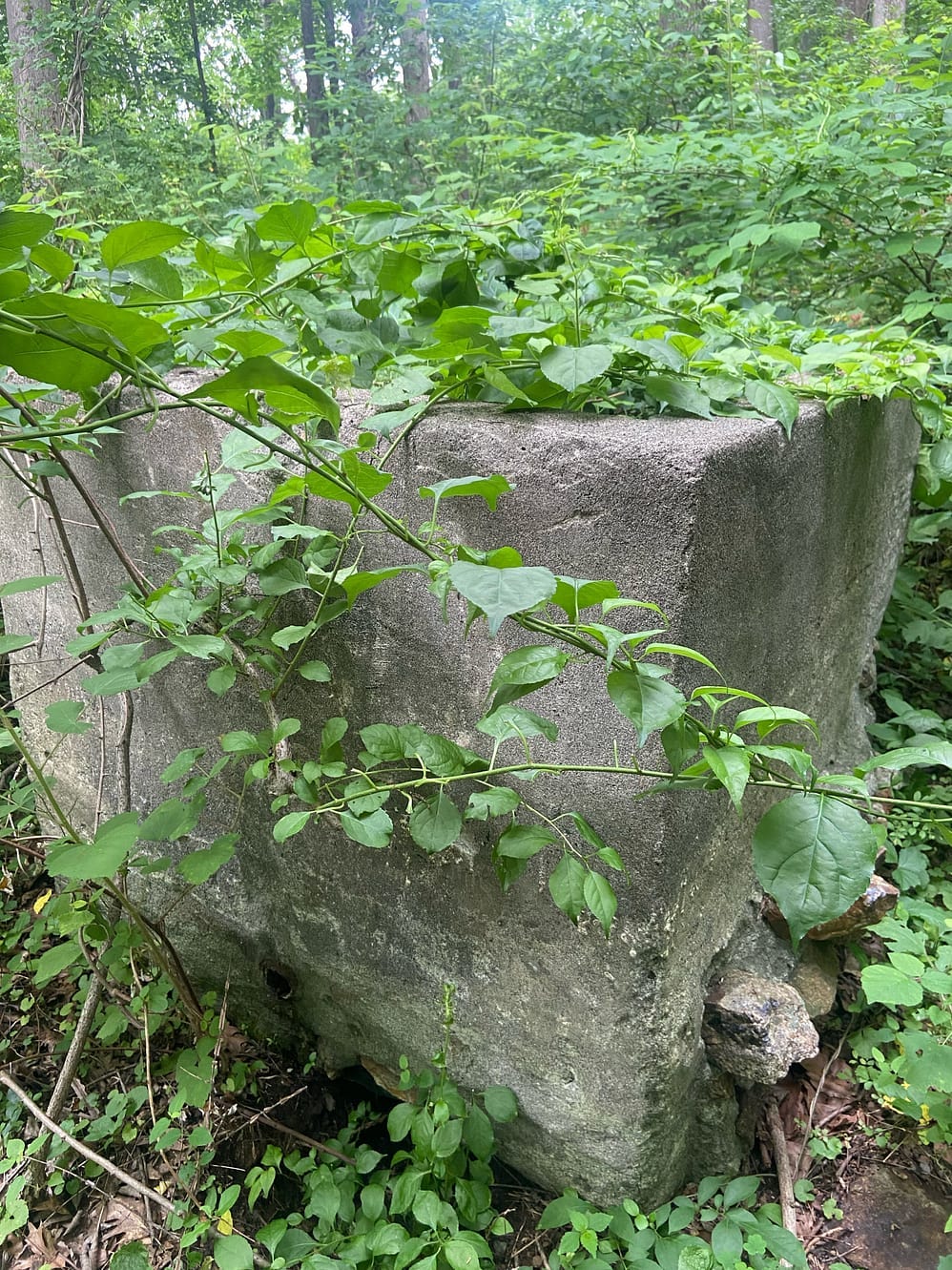
It looked to be a concrete box in the woods.
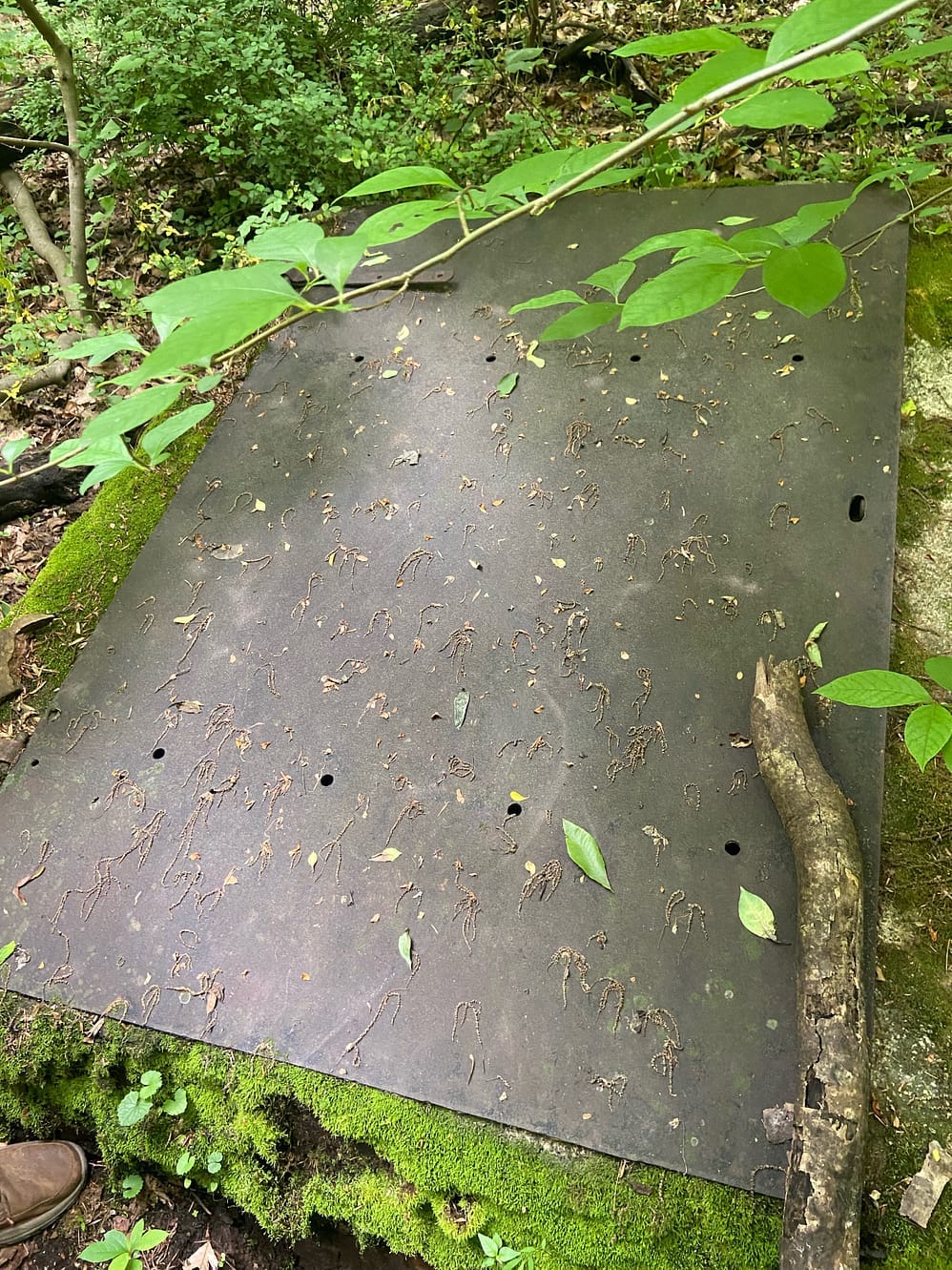
Looking inside, Kevin encountered a metal door.
Upon opening it, he found what looked like an underground stone structure that bore a striking similarity to the retaining pools for some of our earliest springs.
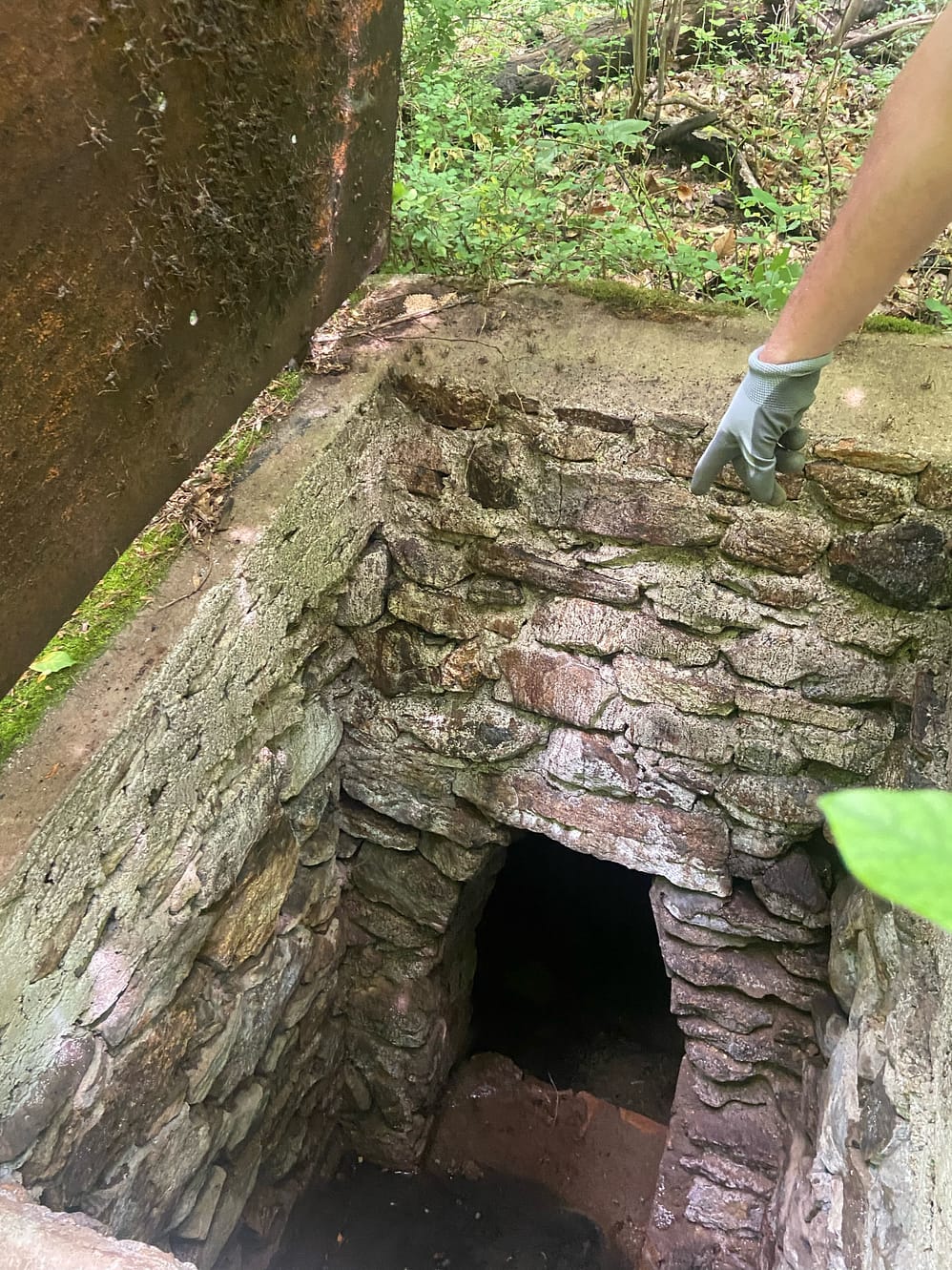
Nearby, he spotted what potentially appeared to be more walls and another odd stone structure.
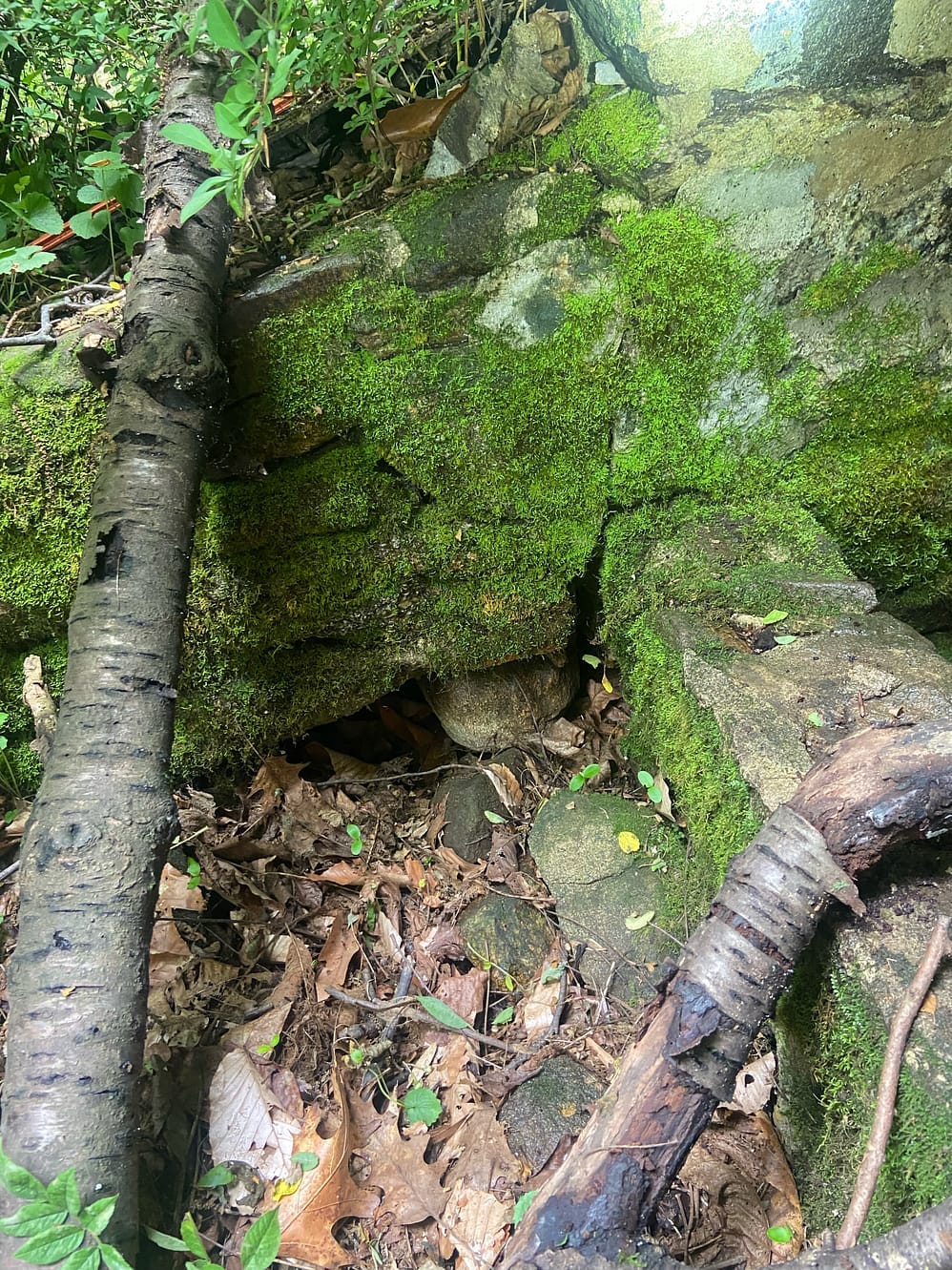
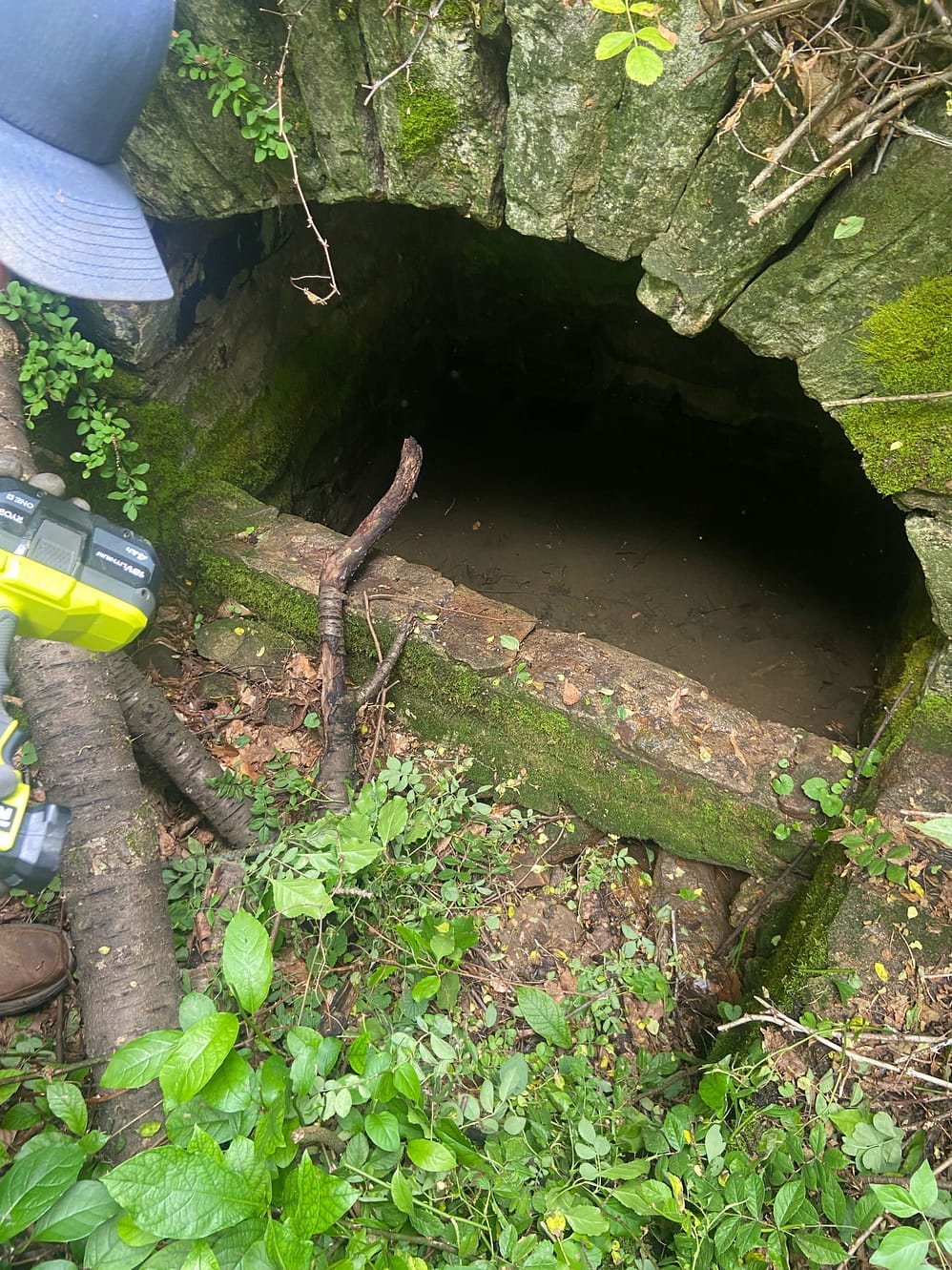
What ARE these?
Our archivist came to help investigate after learning about the discoveries.
We know that from items washing out due to heavy storms and some of the digs Kevin has done as part of maintenance that there are a few artifacts in this area that suggested that it was used during the past.
However, these springs are inarguably much more substantial than a few old shards of porcelain (no matter how intriguing those are in their own right) and indicate more habitual use.
Based on her previous experience with archaeological digs at locations like the Brandywine Battlefield, we estimated, using masonry techniques, that the stone structures likely originated in the colonial period.
However, they have definitely been modified after that period.
The distinct arch shape of one spring and ‘keystone’ shape of the other are intriguing anomalies. The two springs do not have the same design in the masonry, though the technique used to make them match.
One (the spring that is walled off) also potentially appears to have once contained a reservoir that is larger than the other one, though the second seems to potentially have been a deeper well.
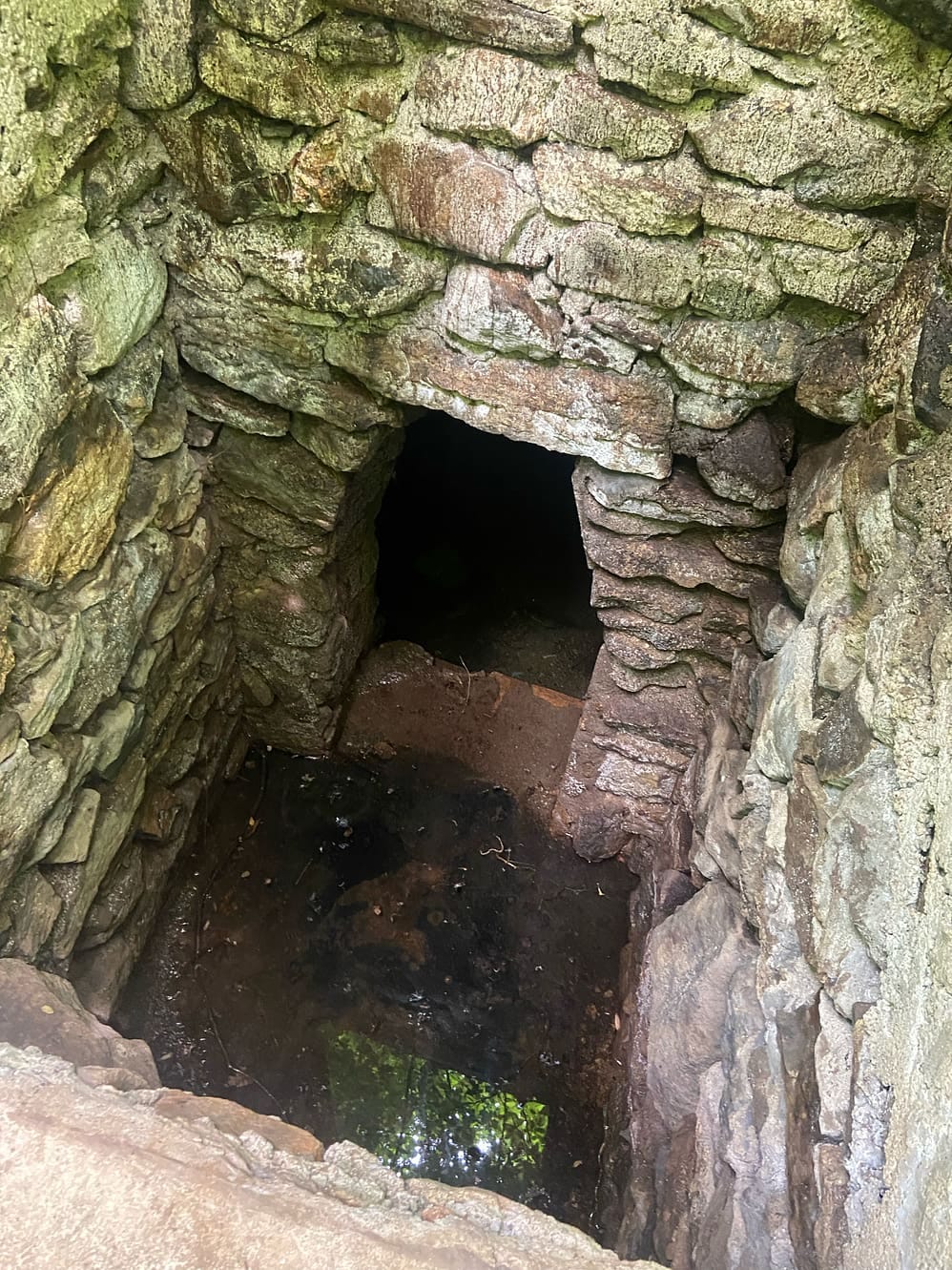
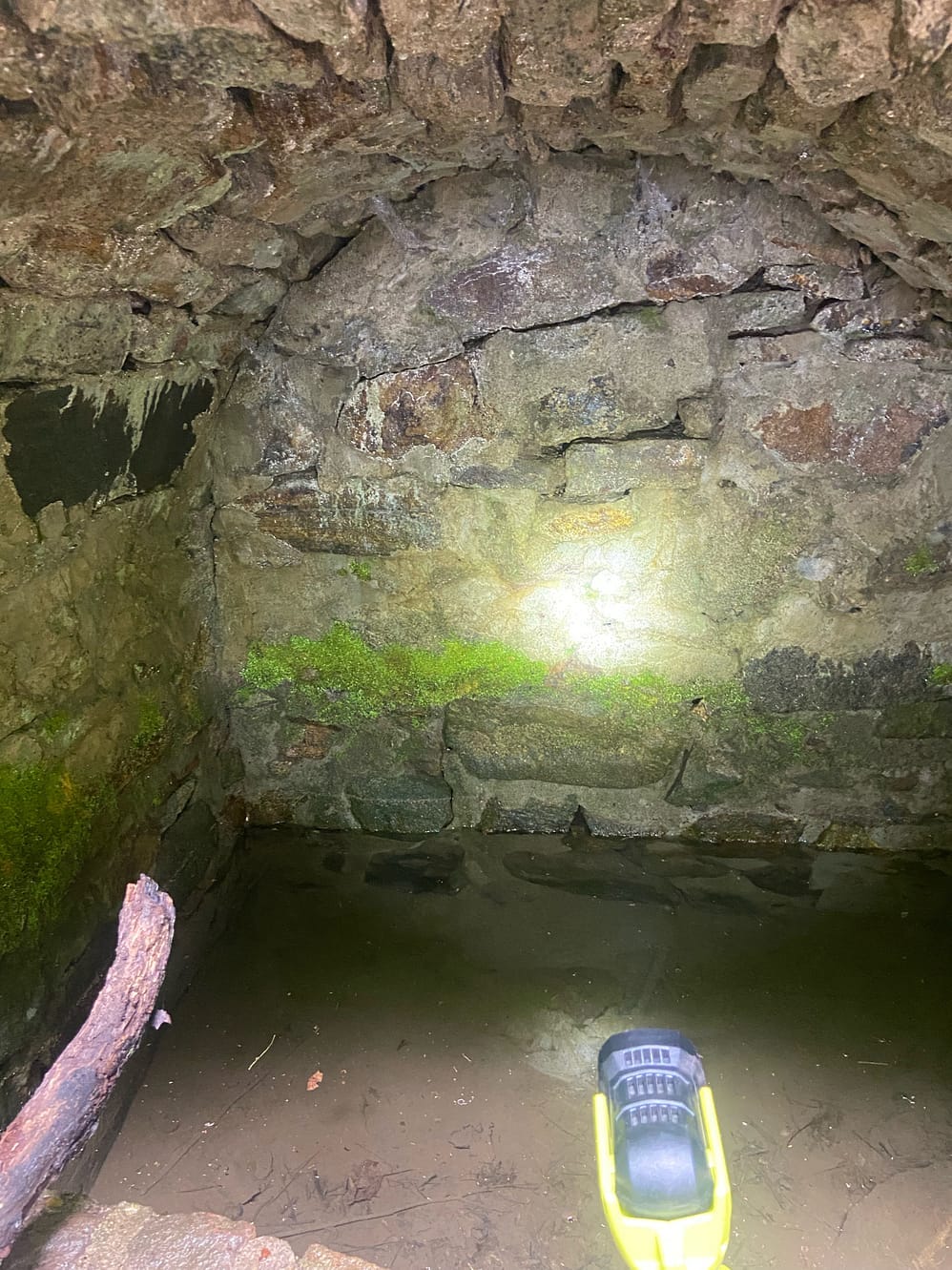
Interestingly, one of these structures enclosed with stone and concrete— a method that became more popular in the late 1880s and 1890s and continued through the 1920s.
The metal door sealing off the second spring also indicates that these springs went into disuse around the 1910s or 1920s, but certainly much later than their initial construction.
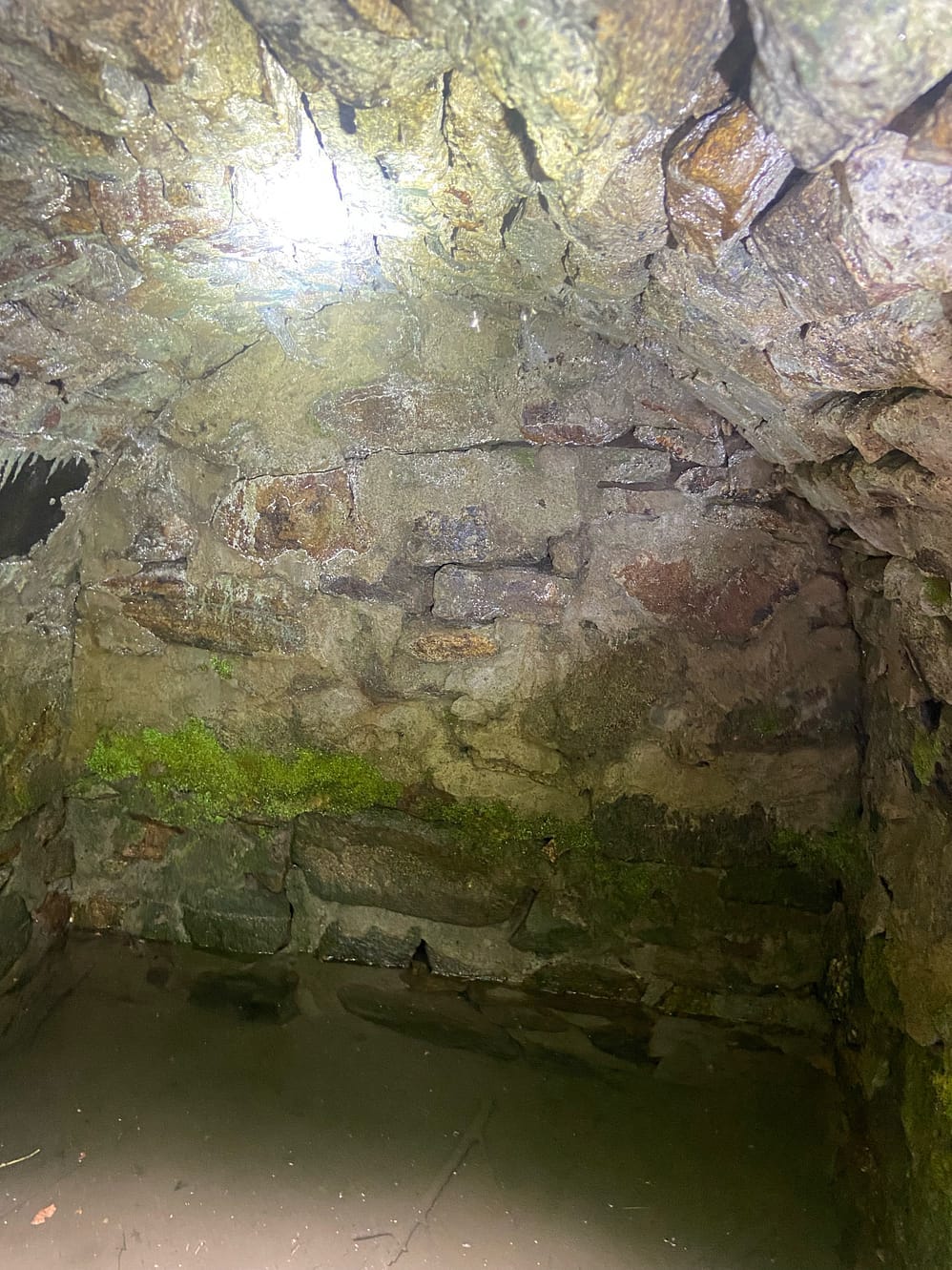
Though we have not yet removed the wall from the walled-off spring to see what is behind it or sent a camera in to inspect the interior, these springs in the woods have remained an intriguing mystery for a few months. We had plans to investigate them further during the colder months, but for the time being they remained curious enigmas.
We do have some evidence that suggests that there was likely activity in that area, though.
Precedent and the North Ridge Trail
From previous aerial pictures of the property, we know that the hill where the Northridge Trail currently lies was once clear-cut as late as the 1970s.

The trees that now grow there form a mostly second-growth forest, featuring a good amount of invasive species such as the Tree of Heaven—a host plant for the invasive lanternflies. Because of their aggressive growth, traversing the hill during the summer months proves quite difficult when the plants are in full foliage.
Please Note: While the trail itself offers a hike that is quite lovely and our campus is open to the public for self-guided adventures, visitors to the campus are NOT permitted to go off trail due to the overgrowth and uneven terrain and the inherit potential dangers caused by doing so.
The Northridge trail winds up the hill that was previously not forested, but even in older photos (such as the one above) we do not see any obvious indication of where these springs may have been.
However, older depictions of the campus, such as a map from a mid-1800s advertisement by hotel owner James Bones, show that buildings once stood up there as well (sometimes identified in early property records as the ‘summer house’).
We can also see on the aerial photograph (shown above) that there appear to be areas where the grass cover is inconsistent, which could be indicative of where buildings potentially once were, which adds some credence to this suspicion.
Springs, Springs, Springs
Earlier mentions in the property records also identify it as a seven-spring property, though in modern times, Historic Yellow Springs officially recognizes only the three springs associated with the Spring Houses: The Jenny Lind Spring (also known as the sulfur spring), the Crystal Diamond Spring (also known as the magnesium spring), and the Iron Spring, whose yellow water gives Historic Yellow Springs its name.
The two additional springs, located on the hill nearby where we suspect an area referred to as the ‘summer house’ once existed, intrigue us since they present two potential springs to add to our awareness.
This week, while updating our archives to maintain them in a complete and digital form, our archivist discovered a research paper written in 1939 that provides us with a bit more clarity.
Higham’s Paper
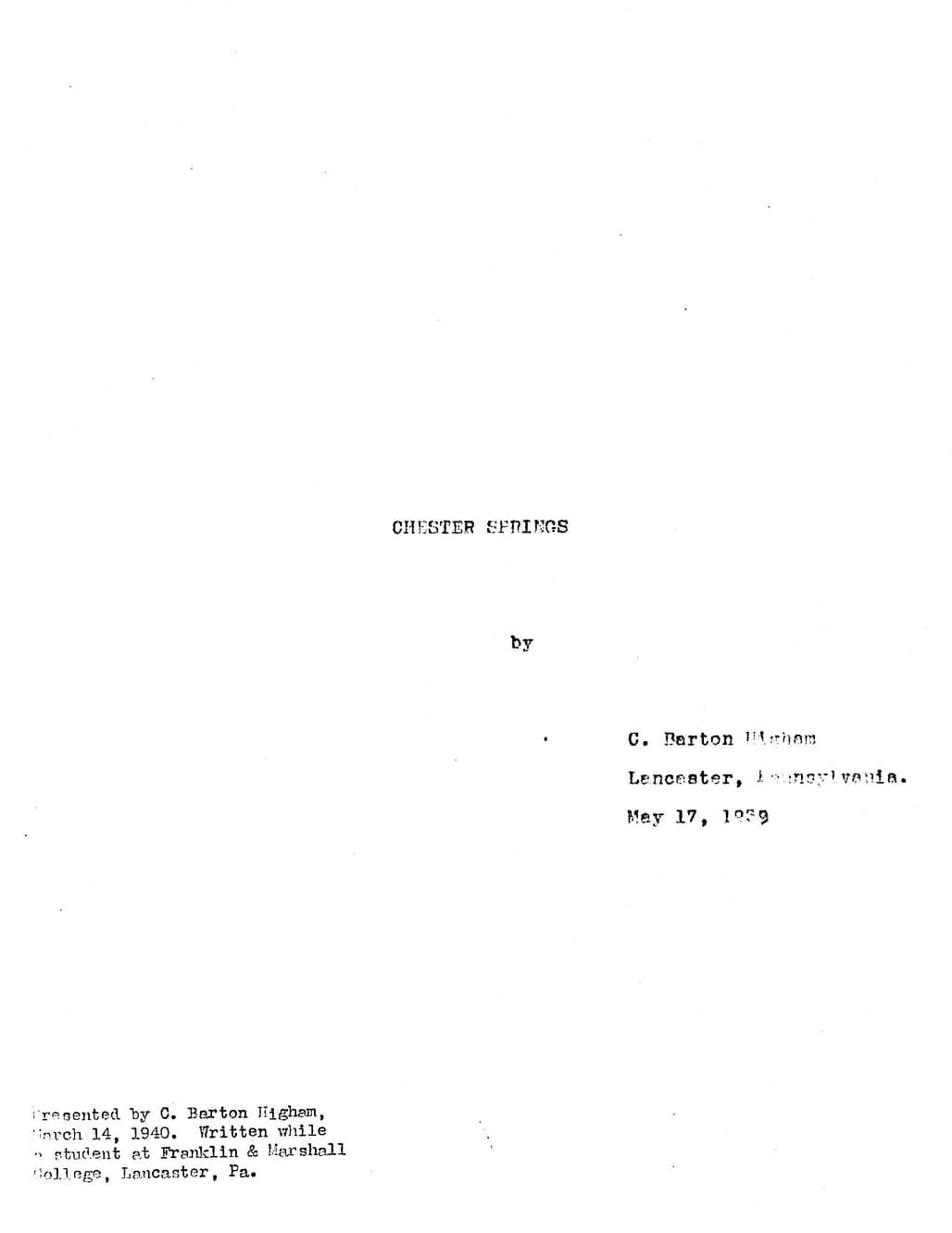
This paper, written during the PAFA period, contains a retrospective of all that was known about our campus’s history during that time. C. Barton Higham, then a student at Franklin & Marshall in Lancaster, authored it.
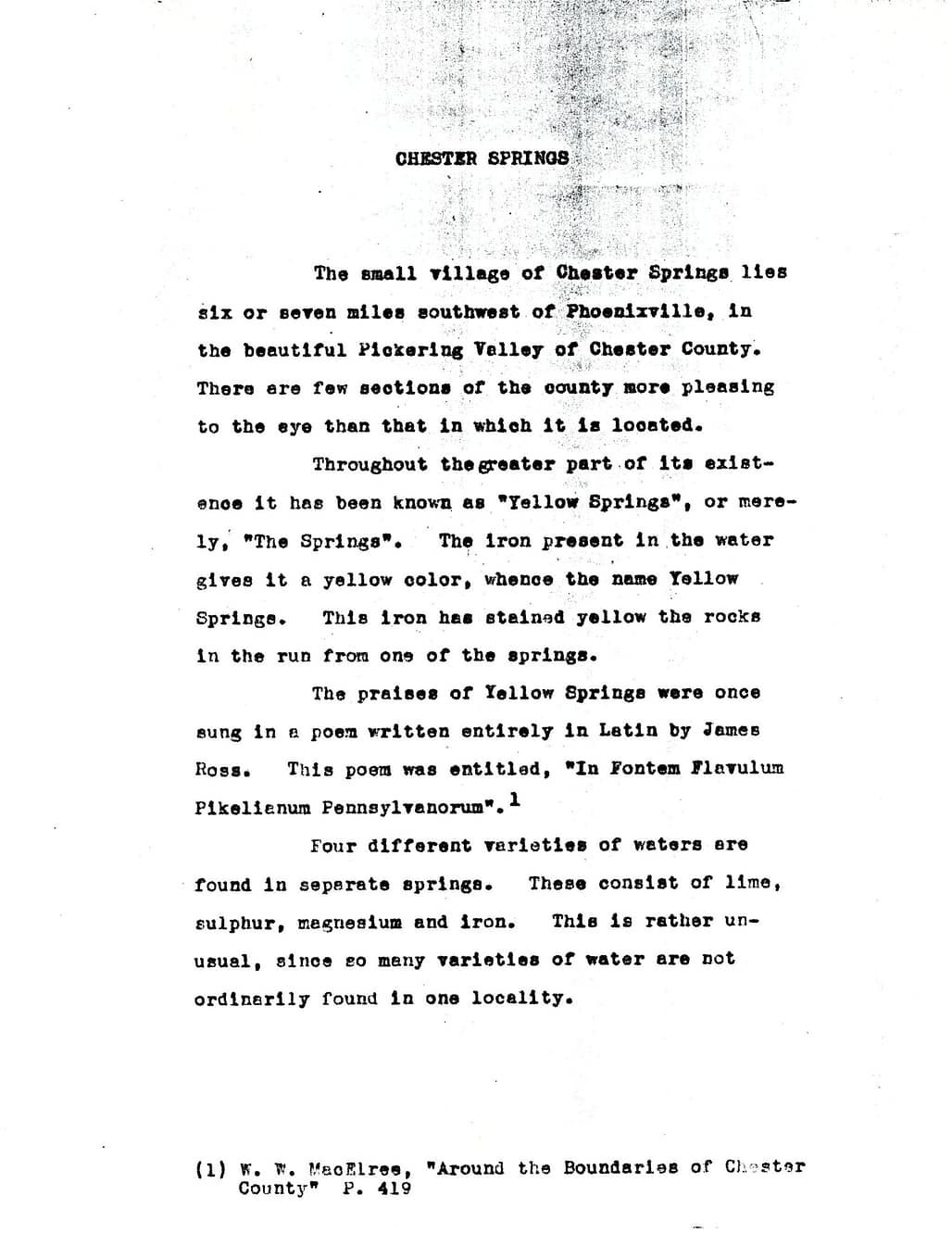
Though the paper contains a few errors— such as incorrectly identifying Yellow Springs as Bristol Springs (a separate town many miles away) that was also mentioned in Watson’s Annals of Phoenixville— it also features a number of factual points about our history as well.
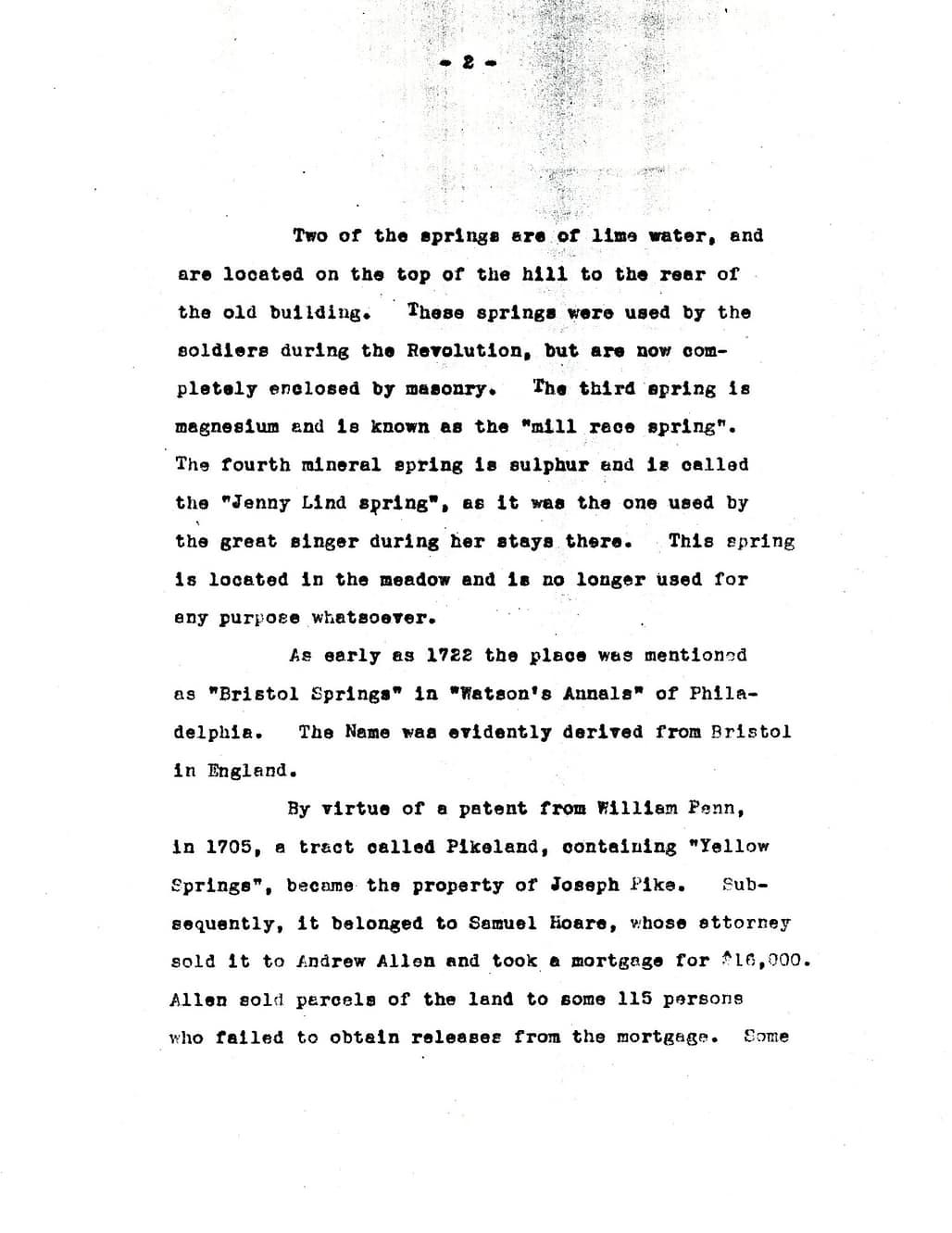
Higham also makes an incredibly intriguing mention of two ‘lime water’ springs used by the Revolutionary War Hospital, which have since become “completely encased in masonry”.
The time period during which this paper was written aligns with the techniques used to wall off the springs we found on the hill. This paper offers us both clarity and confirmation about their past uses.
We are currently doing additional research into our archives and the sources Higham uses to verify these claims.
Revolutionary War Medicine?
That being said- what we have already uncovered is incredibly intriguing. If the springs genuinely served as drinking water or a form of early hydrotherapy at the Hospital during the Revolutionary War, then this find significantly enhances our understanding of the kind of medicine practiced there.
Additionally, if we confirm that these springs are indeed the same ones that Higham mentions in his paper, we may pinpoint exactly when and why they were walled off.
Kevin has noted that he found pipes while digging on the property, which may have allowed water to flow down from the hill into the hospital area. This water could have served to help heal the sick, provide drinking water, and fulfill a number of other therapeutic uses.
Healing Water
We know from our recorded history that, prior to the Revolution, Yellow Springs functioned as a spa.
The town later gained fame and renown as both a fashionable destination and a healing spa, with genuine efforts in hydrotherapy undertaken by practitioners such as Dr. Lingen.
However, we also know that although the reputation of the pre-Revolution spa was a bit more ‘rough around the edges’ compared to the polished, genteel resort town that Yellow Springs would become, records mentioned the medicinal aspects of the water springs as early as 1722 (likely even earlier, considering our knowledge of the indigenous people in the area).
What this means for the soldiers treated at the hospital who may have used the water still remains a matter of speculation.
Nonetheless, the rediscovery of these springs ignites an intriguing mystery and offers us a glimpse into many more captivating anecdotes from our past that we can uncover when we venture off the beaten path— sometimes literally.
🪨🏞️🍃
See more online at: Historic Yellow Springs
 | A guest post by
|