
Throwback Thursday: The Township Building
From Grain Farm to Arts Hub, This Space Has Been Inspiring People for Over 100 Years


Setting the Scene
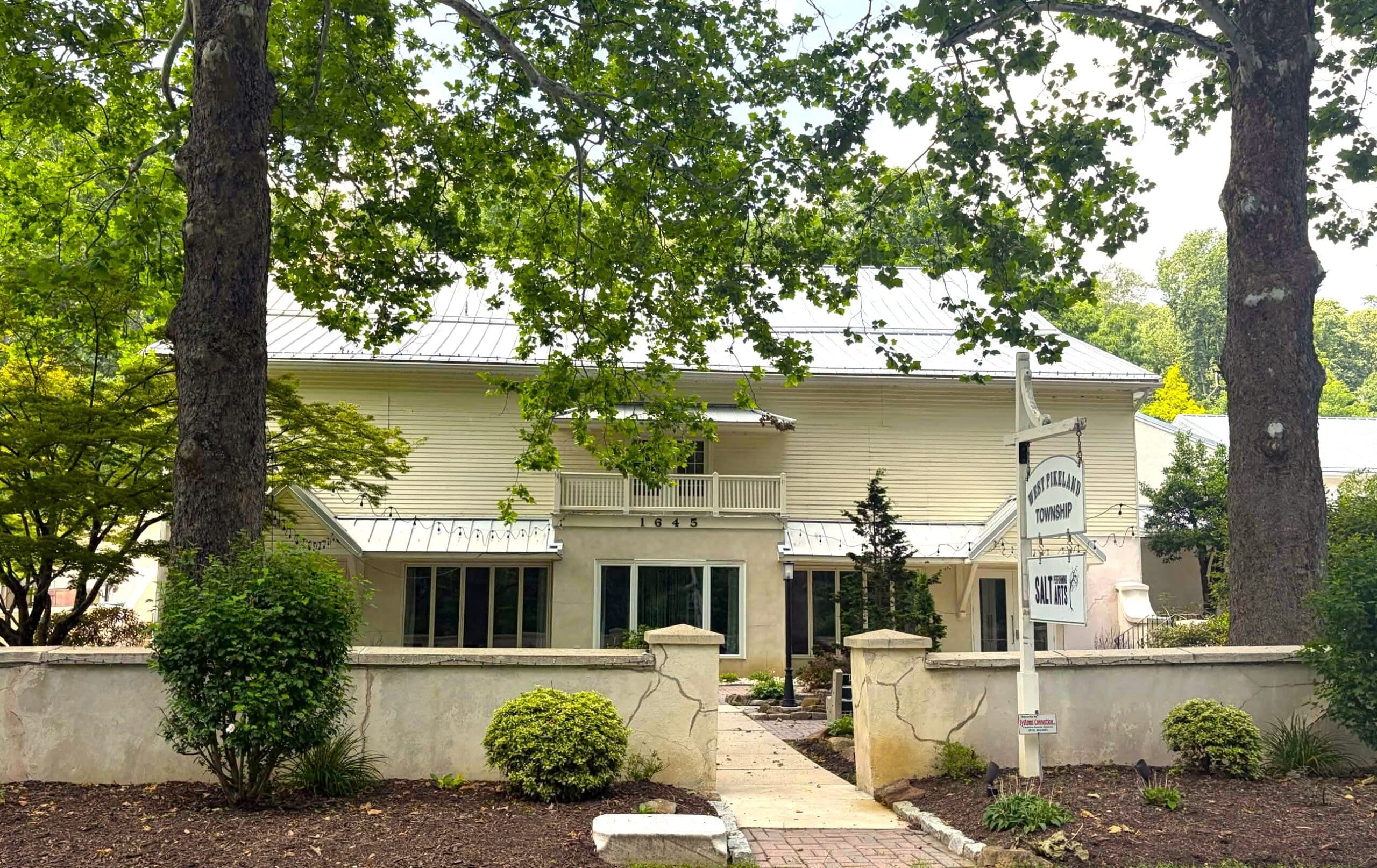
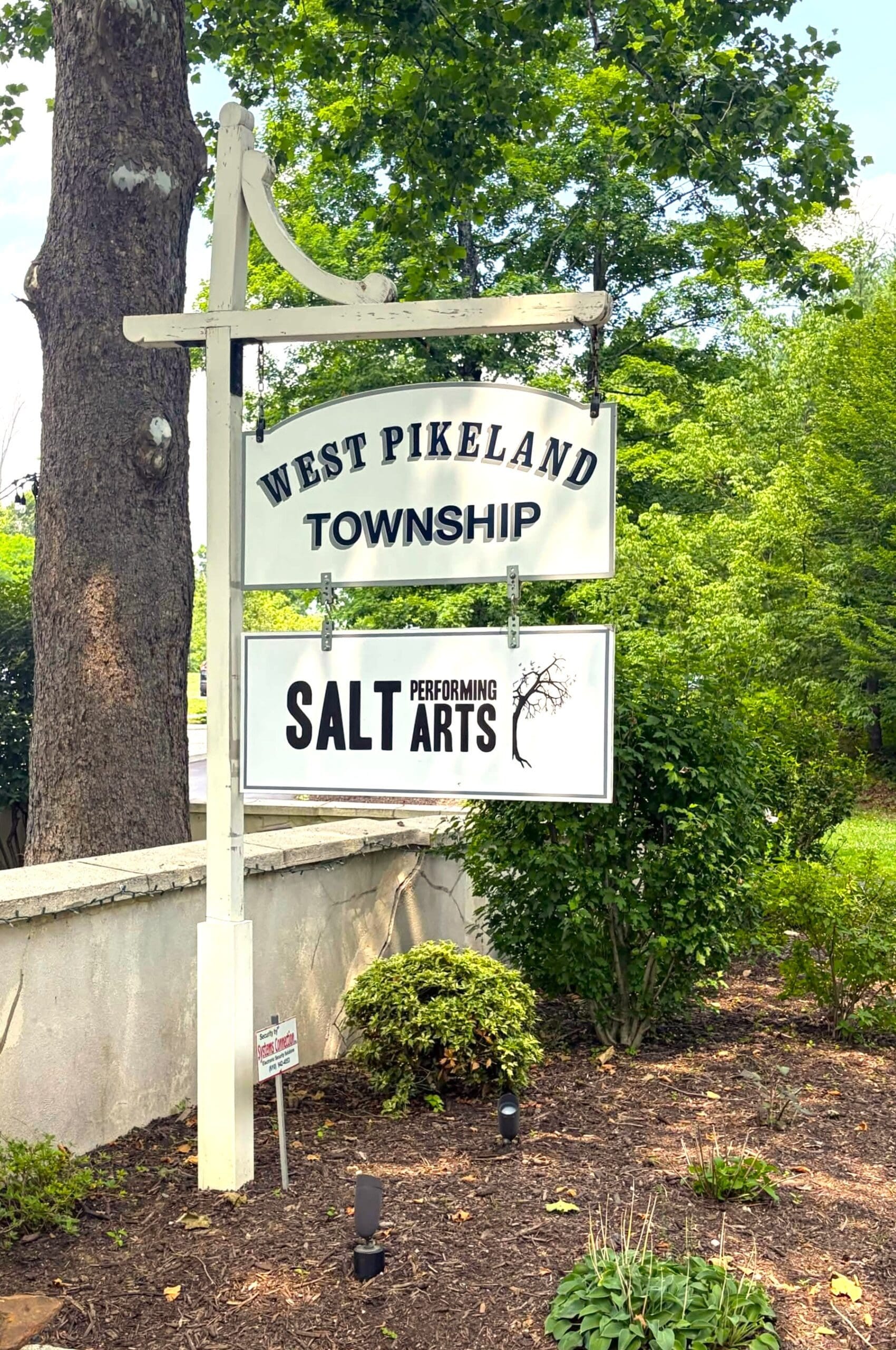
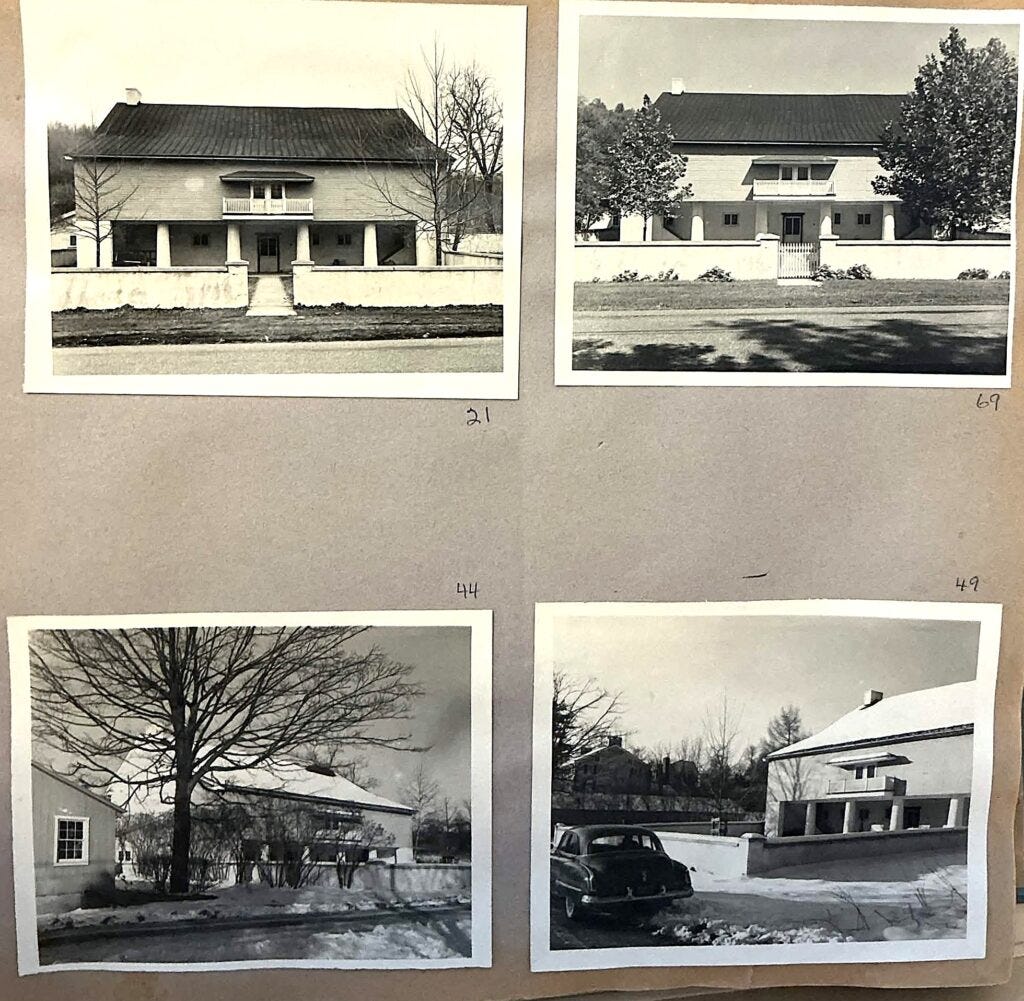
Visitors to 1645 Art School Road in the Village of Yellow Springs today will be met with a large, off-white building, one that looks very much like a typical remodeled old barn. A sign out front identifies it as the West Pikeland Township building and proclaims the presence of the SALT Theater.
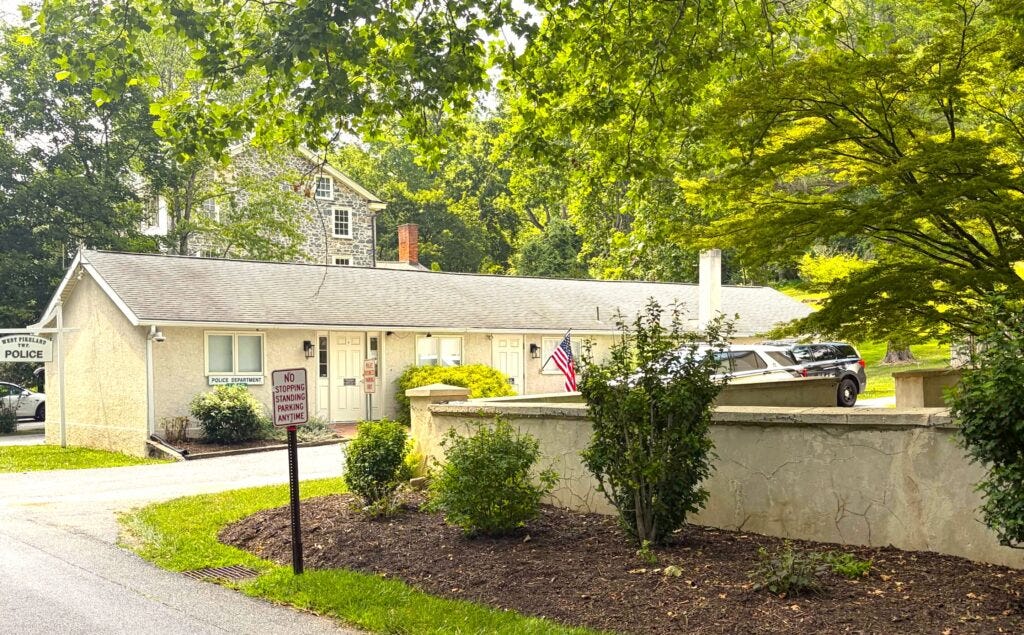
Beyond the Township Building's small courtyard and across a small parking lot, visitors will notice the West Pikeland Police Department. It is situated in what was once an old chicken coop.
Strolling further down the road to the Lincoln Building in Historic Yellow Springs proper, visitors will see a map of the town. This map further identifies the building, marked as Number 10 on the map, as the “Large Barn”.
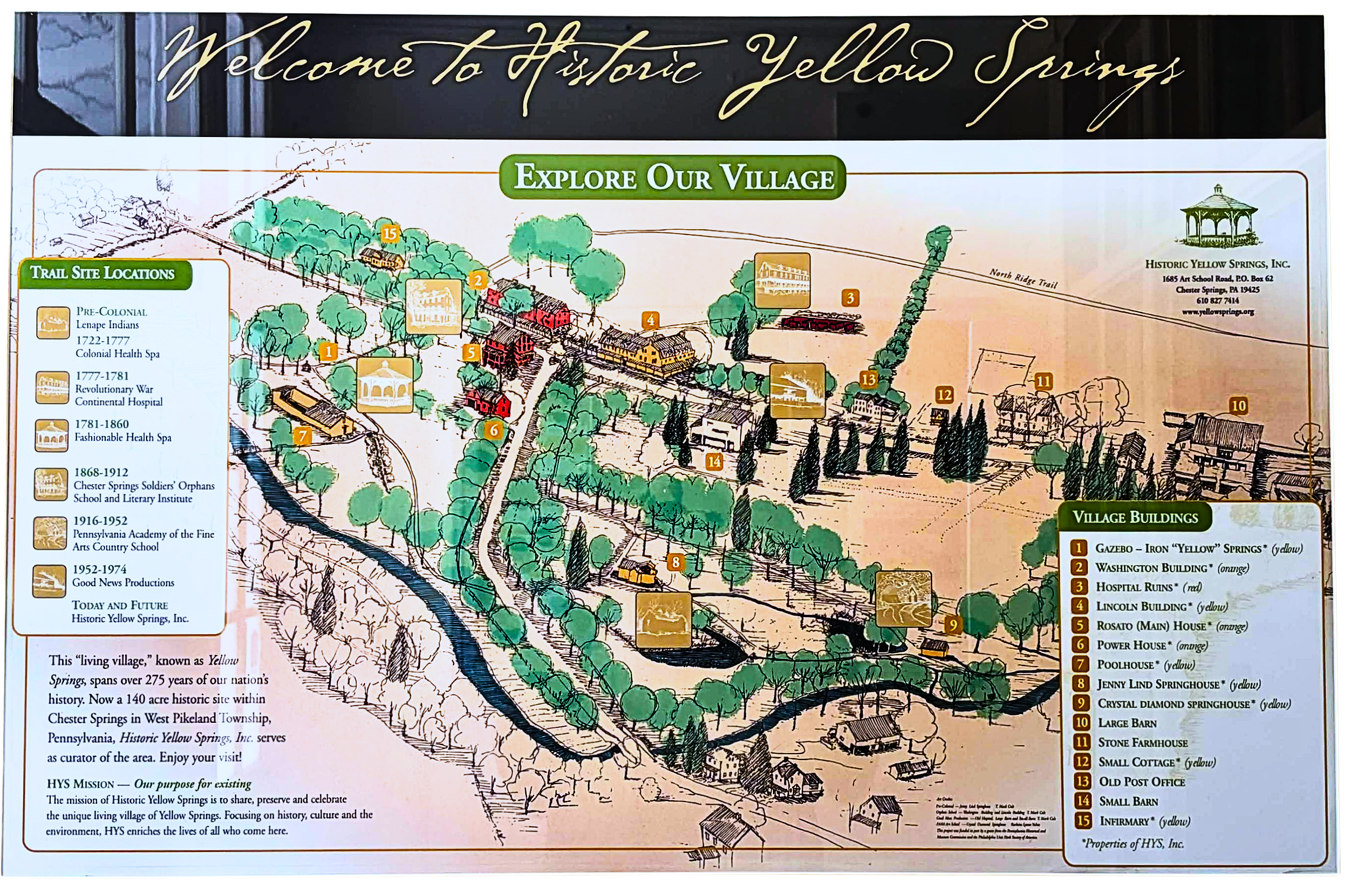
At first glance, it all looks settled and simple. That being said, beyond what we can see today, the walls hold older lives close to the surface. Beneath that pale paint sits a place that has changed with the times, but never drifted far from art, labor, and performance. This building has worn many names and many purposes, and each one left a mark.
The past here keeps working quietly underneath, like a sketch that shows through a finished canvas. We are not looking at one story here- we are looking at a whole stack of them.
Before the Barn Grew Roots
The Settling of Yellow Springs
Long before the barn rose here, this land belonged to the Lenni-Lenape, whose ancestors used it since at least around 3500 BCE. Their presence still speaks through projectile points found on the property of Historic Yellow Springs.
In 1677, Quaker settlers founded Burlington, New Jersey, and helped shape another important Delaware River settlement. Four years later, in 1681, King Charles II granted William Penn the land that became Pennsylvania to repay a debt owed to Penn’s father, Admiral Sir William Penn. That grant included what we now know as Pikeland, the township that holds Yellow Springs.
Then, in 1682, Quaker leaders hoped Pennsylvania and New Jersey would create a wide region where Friends could govern themselves with religious freedom. William Penn and eleven other Quakers purchased East New Jersey after George Carteret’s death, and the group later divided ownership among twenty-four proprietors.
Also in 1682, Dr. Daniel Coxe became one of those proprietors. He was one of the few owners who was not a Quaker.
By the 1680s, Dr. Daniel Coxe, Sir Matthias Vincent, and Major Robert Thompson became the original landowners whose properties later formed Vincent and Pikeland Townships. In 1685, Benjamin Chambers, a friend of William Penn, surveyed the area between the Delaware River and the Susquehanna River. His map can be seen below.
Springs, Roads, and a Rising Village
During the 1700s, European settlers, especially German immigrants, began living on this land more permanently. In 1705, William Penn granted more than 30,000 acres to Matthias Vincent, who then leased over 10,000 acres known as “Pikeland” to Joseph Pike.
By 1721, the “Iron Springs” of modern-day Yellow Springs appeared on a map of the Township of Pikeland by Isaac Taylor. A year later, the American Weekly Mercury reported a letter from New York describing a mineral spring in the Great Valley about 30 miles from Philadelphia. That spring would later be known as “Yellow Springs.”
For a time, it remains unclear what the current site of the Township Building was used for. Even so, settlement began forming around the Yellow Springs tavern, which operated as an early Colonial spa. In 1737, the Walking Purchase dispossessed the Lenni-Lenape of vast territories in Pennsylvania, forcing them from their ancestral homeland, including Pikeland, now West Pikeland.
In 1761, James Martin acquired the tavern license and the 160 acres surrounding it. That tavern’s property, now part of the Washington Building’s Brick Room here at Historic Yellow Springs, included nearby springhouses.
On May 5th, 1763, Sheriff John Fairlamb advertised the sale of the Yellow Springs Plantation and Tavern previously owned by James Martin. The notice suggests the sale may have covered only half the property, though this remains unclear. Even so, stage wagons from Philadelphia continued running on May 19th, 1763, bringing visitors and goods to the spa, and the tavern remained active until the Revolutionary War.
War Came Calling
During the Revolution, Yellow Springs stood as a working plantation owned by Dr. Samuel Kennedy and his wife, Sarah Ruston Kennedy. The village also saw important visitors, including General George Washington and Alexander Hamilton.
On September 11th, 1777, the Battle of Brandywine sent wounded and retreating soldiers through the region. In its aftermath, fleeing troops found shelter and care in the homes of immigrant farmers near Yellow Springs. Even earlier, in 1776, a Hessian soldier passing through recorded “Rebel Hospitals” operating out of barns in Yellow Springs. While we cannot identify those exact barns, the account shows that medical care had already begun shaping the village.
Just days later, the Battle of the Clouds in Frazer collapsed under a nor’easter. The American army then marched to Yellow Springs and camped in heavy rain. George Washington stayed at the tavern, while roughly 11,000 soldiers encamped across the property overnight before moving on to Warwick and Redding Furnaces the next day. Though we cannot confirm this due to patchy records, it is highly likely that some of those troops camped in the area where the Township Building now stands.
Between 1777 and 1781, the Yellow Springs property became a major Continental Army hospital complex. Washington Hall rose between 1777 and 1778 as both a general hospital and the headquarters of the Hospital Department. Around it, several barn-based “rebel” hospitals operated as flying hospitals, and the site also supported the supply depot for the Middle Department’s medical network. Although the Township Building does not appear directly in the records for this period, the entire landscape reflects that wartime medical presence.
After the war, in 1783, Captain Alexander McCaraher, a close friend of the Kennedy family, reopened the tavern at Yellow Springs, now the Brick Room of the Washington Building, and restored “the baths and bath houses.”
From Spa to Selling Point
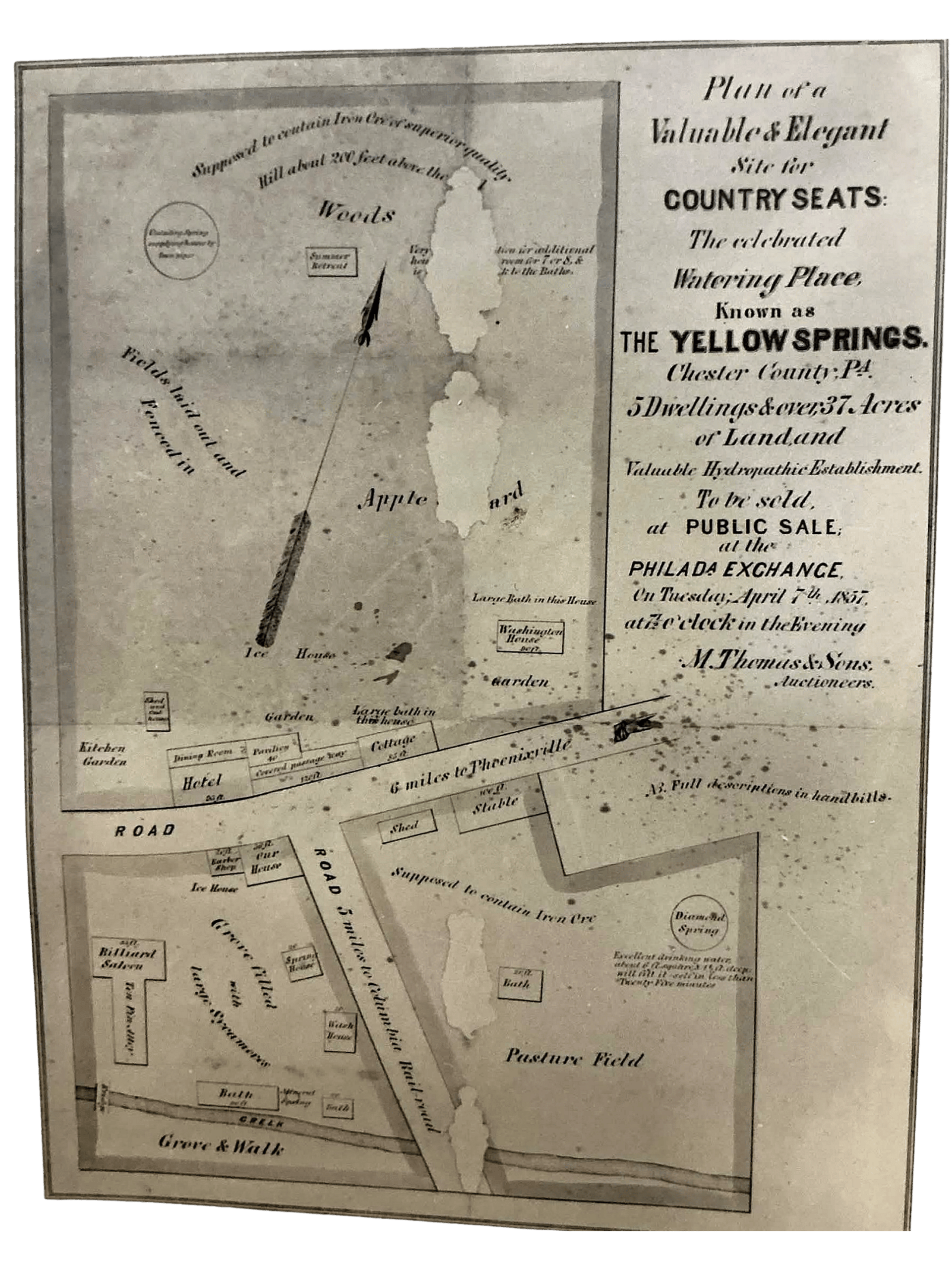
After the war, ownership and ambition kept shifting. In 1789, all of Pikeland Township, East and West, went to auction to satisfy the debts of Andrew Allen owed to Samuel Hoare. At that time, 115 terre tenants held land there- all of which had their lands sold to new owners. This included the Yellow Springs plantation and all of its land.
This, however, would not be the end. After the Revolutionary War, Yellow Springs would enter its second spa era. Defined by people like Mrs. Margaret Holman, Colonel James Bones, and Dr. George Lingen. Business feuds, opulent balls, and famous visitors would define this land for the next century or so.
By 1810, Yellow Springs appeared in The Portfolio, a national magazine. Around the same time, Col. Bones, who owned a large share of the Yellow Springs property in the village since 1806, tried to sell his holdings at auction as the “Town of Bath.” The sale did not succeed, and fewer than half of the advertised lots sold.
Even so, the area kept drawing visitors as a successful spa resort. Changing hands from Bones to Holman to Lingen and others, the Yellow Springs resort became renowned as a relaxing, luxurious sanctuary for high-society visitors from Philadelphia and genuine health-seekers alike. During the second spa era, famous guests stopping by the Yellow Springs resorts included Jenny Lind, Fanny Kemble, P.T. Barnum, and Chang and Eng Bunker.
The Large Barn Rises
For the Township Building specifically, this was when the original structure, known colocally as the Large Barn, first took shape. Built in 1845, it began its life as a barn serving a large farm at the eastern edge of Yellow Springs Village.
Then came 1867, the final season that Yellow Springs served as a resort. That year, the village and Washington Hall were owned and operated by A. U. Snyder, Esq., and they still served hotel guests. Despite all efforts, though, after the resort closed for the summer that year, there would be no more 19th-century debutants, notables, actresses, or circus moguls visiting Yellow Springs. The Civil War had put a stop to that.
Soon after, the property took on a new public purpose. From 1868 to 1912, Yellow Springs became the Pennsylvania Soldiers’ Orphan School. That chapter changed the village again, but it kept the site full of daily life, discipline, and young voices.
When PAFA Heard the Light
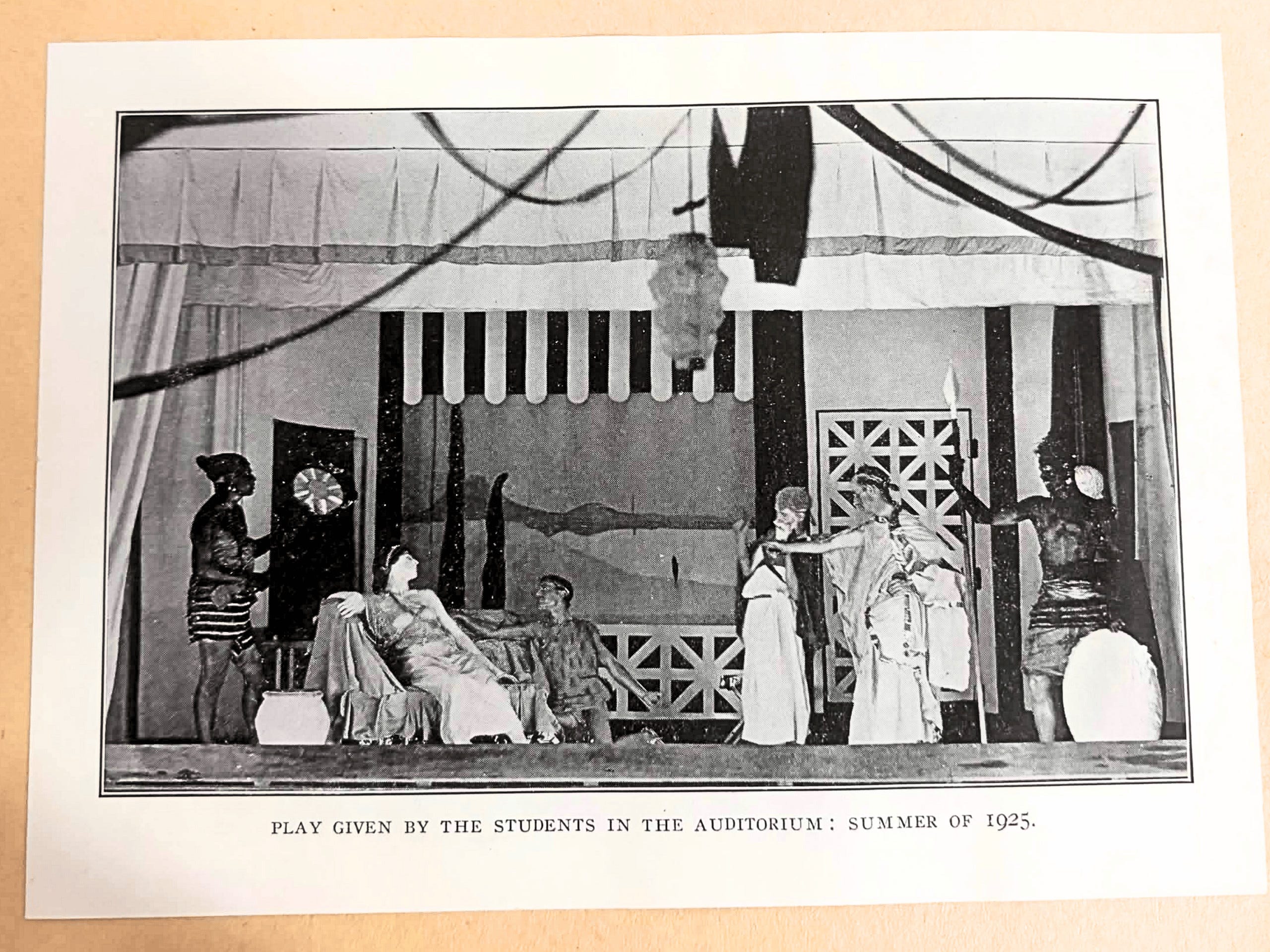
After 1916 and until 1952, the Village of Yellow Springs belonged to the Pennsylvania Academy of Fine Arts (PAFA) as a summertime painting and sculpture colony. PAFA itself, founded in 1805 in Philadelphia, stands as the first and oldest art museum and school in the United States.
In 1927, as student admissions rose, the Academy purchased a 100-acre chicken and grain farm beside the school property and remodeled the barn into a modern sculpture studio. This building became one of the most visible signs of the Country School’s success. The Large Barn became known, for a while, as the Sculpture Barn or Sculptor’s Studio.
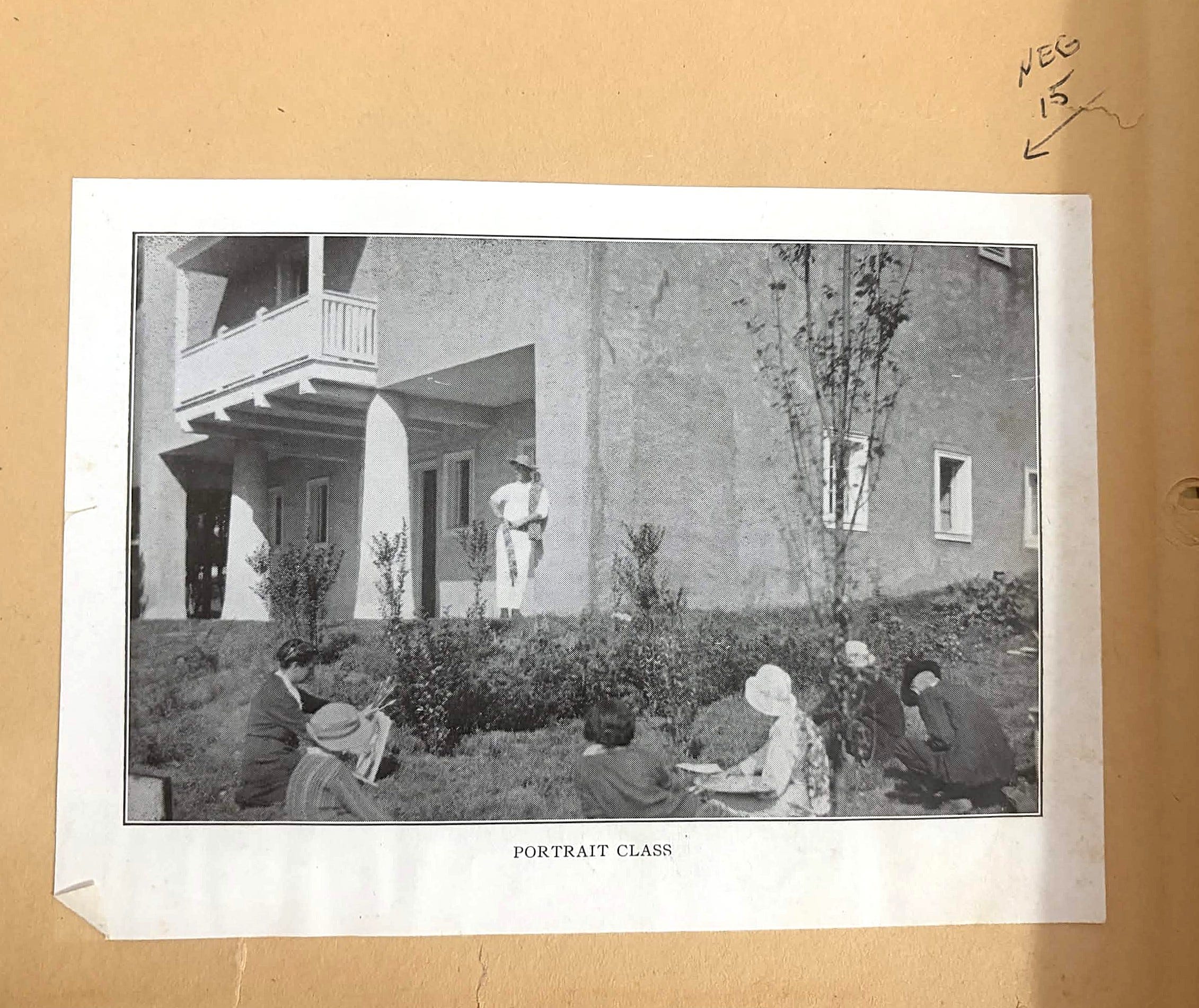
To celebrated sculptor Angelo Frudakis, who attended the PAFA Summer School in 1940 and 1946, Yellow Springs was a “Shangri-la”, and “the Sculpture Barn was like a cathedral, with great north light–the three-dimensional lighting that you needed.”
Frudakis later became known for public sculptures in Philadelphia, including “The Signer” at 5th and Market Streets.
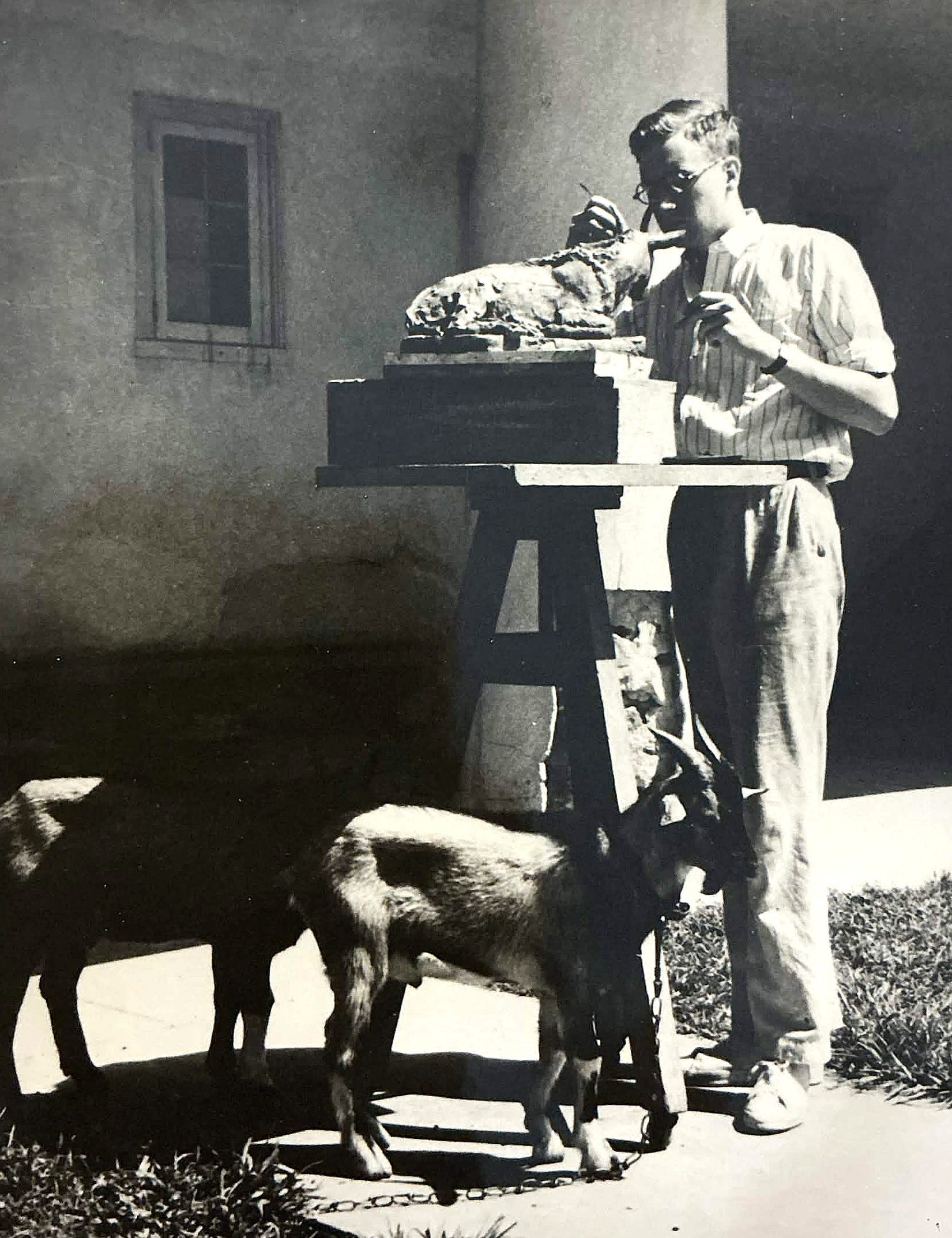
The Sculptors’ Studio soon became the domain of Albert Laessle and later his student, Charles Rudy. Outside, the models stood in the “corral” in front of the barn.
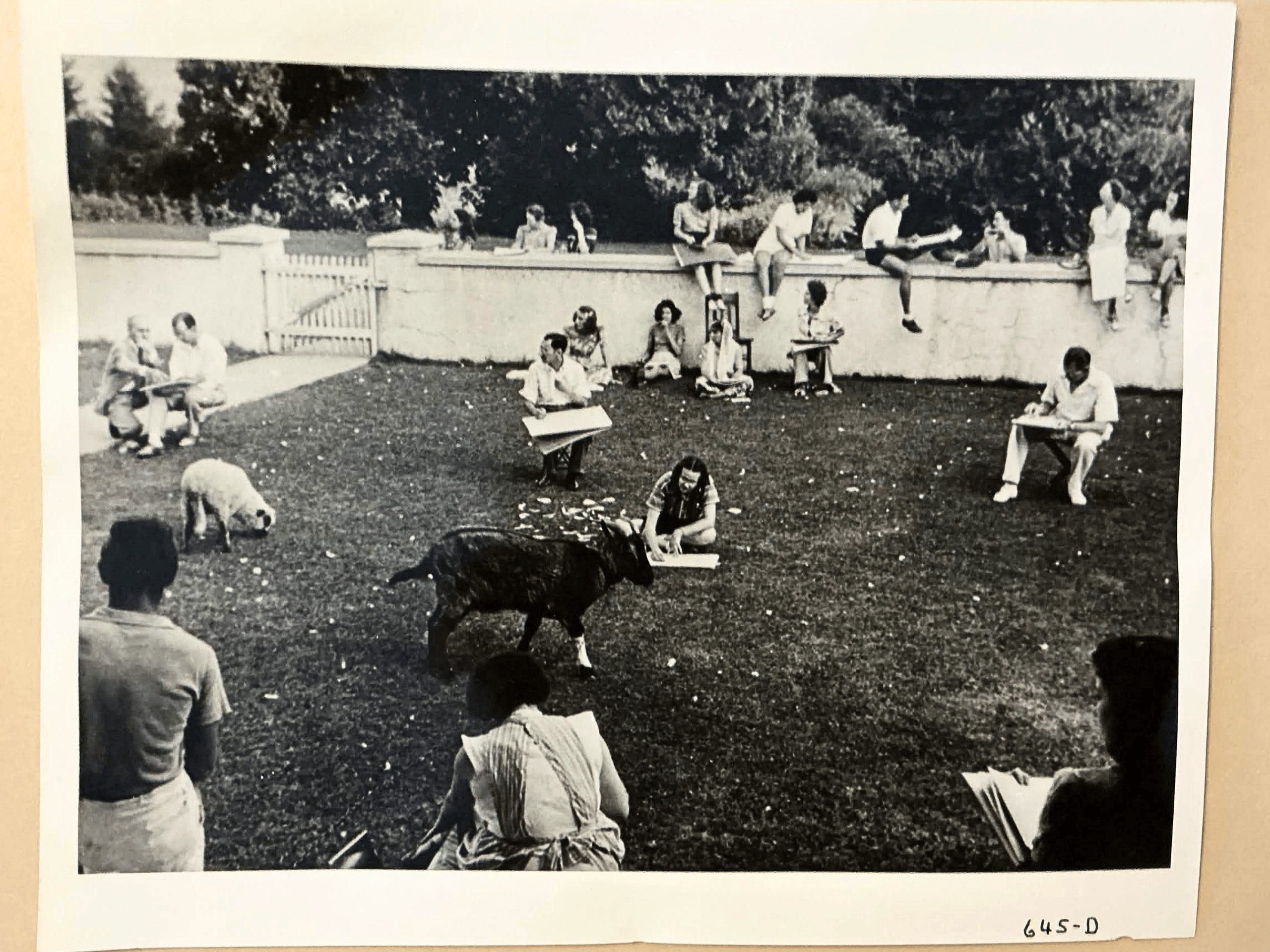
The Evening Bulletin Philadelphia, on August 12, 1939, described them as “the temperamental goats, Nip and Tuck, the bad-tempered ducks, Henry VIII and Anne Boleyn, and horses, cows, and pigs”.
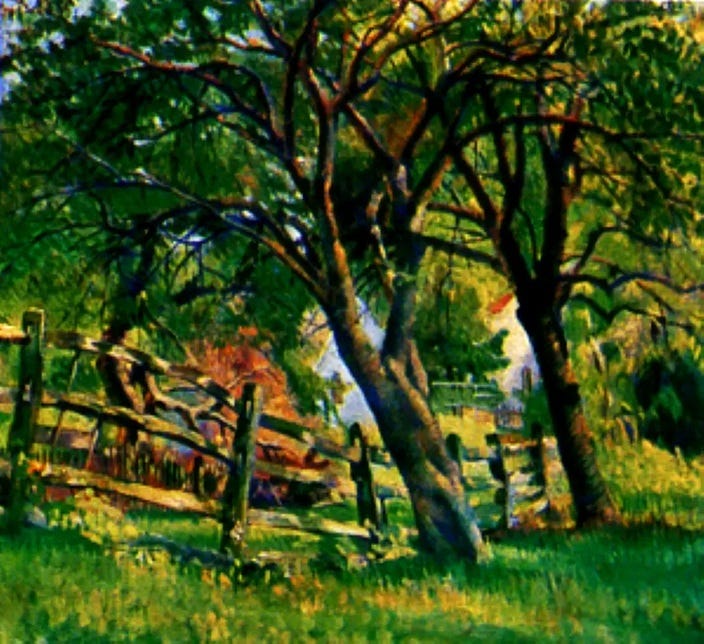
Grace Russell Raymond may have painted this vibrant watercolor from the balcony of the Sculptors Studio, looking across the meadow to the Crystal Diamond Spring.
Reels, Rehearsals, and New Acts
Good News Productions
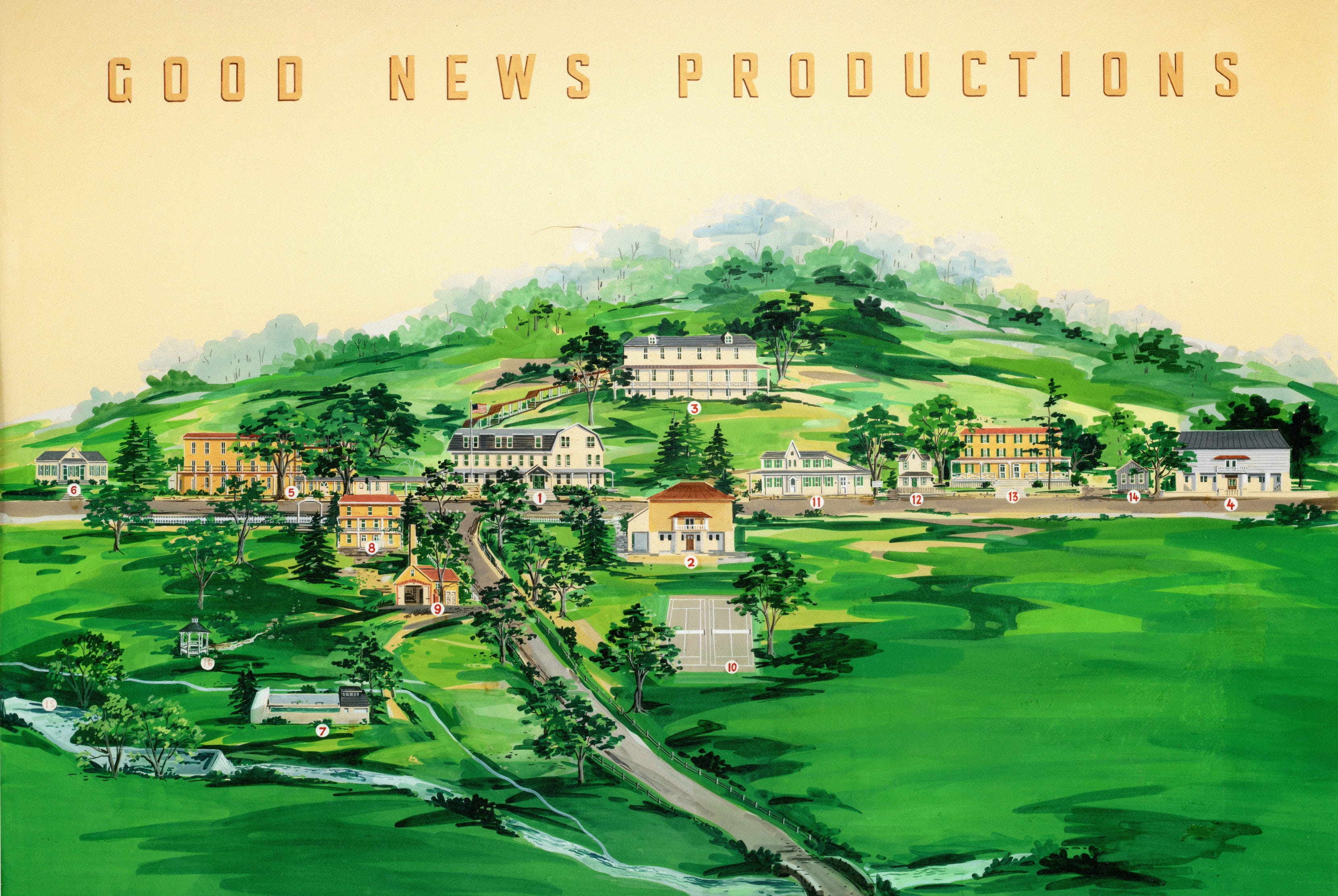
In 1952, PAFA sold the property to Good News Productions, a faith-based film company headquartered in the historic village from 1952 to 1974. Run by filmmaker Irvin Shortess “Shorty” Yeaworth Jr., the studio transformed the sculpture barn into a theater and used it as Studio C for movie making. Production lighting went in, sound stages followed, and the chicken house became a prop shop.
That era brought the cult classic film THE BLOB, starring Steve McQueen in the role that launched his career. Good News also produced more than 400 Christian-themed films, along with television and radio programs, before it closed in 1974.
The Yellow Springs Association and the People’s Light and Theatre
Historic Yellow Springs, then the Yellow Springs Association formed in 1965 and headed by Connie Fraley, purchased the entire village in 1974 and began renovations. The barn then opened its doors to People’s Light and Theatre, which produced plays here until moving to its current site on Rt. 401 in Malvern.
The People’s Light brought professional theater to Yellow Springs from 1976 to 1978 through performances at the Center for the Performing Arts, which operated out of what is now known as the Township Building.
According to publicly available sources, The People’s Light was founded in 1973 by Dick Keeler, Ken Marini, Megan Fruchter, and Danny Fruchter after they left Hedgerow Theatre. The troupe first performed in East Bradford Township, where it staged The Emperor Jones in 1974. Intriguingly, this first location in East Bradford Township saw the theater operating out of Strode’s Mill-- also a historic, old structure from the early 18th century.
As attendance grew and more space was needed, the company relocated its productions to Yellow Springs and the modern-day Township Building, opening its run there with Mother Courage and Her Children. During those three years, People’s Light strengthened Yellow Springs’ long tradition as a center for education, culture, and the performing arts.
In 1979, the company moved to Malvern, where it continued to expand its influence. Beyond its mainstage productions, People's Light also extended its mission through prison tours that continued until 1986.
The Yellow Springs Institute
In 1975, the Yellow Springs Fellowship for the Arts, later Yellow Springs Institute for Contemporary Studies and the Arts, was founded to “establish an interdisciplinary laboratory for creative individuals whose work interprets aspects of contemporary experience, encourage creation of works that expand artistic boundaries, enlarge cultural understanding, and employ art and artists in the life of communities.” John A. Clauser, an architect, served as founding director for the Institute’s entire life.
The New York Public Library’s Archives hosts a collection on the Yellow Springs Institute, the index which can be seen here. The following information was sourced using information available in that online portal.
Residencies ran from one to three weeks between mid-May and October. Performing and visual artists received room, board, and a stipend to develop unproduced works, then showed a work-in-progress performance before an audience. At its height, the Institute received more than three hundred applications from troupes and individuals from around the world, and it accepted sixteen.
Late in the 1970s, the physical facilities took shape, including a two-story performance facility with an amphitheater. People knew this outdoor experimental space as the Earthwork. In 1990, the John D. and Catherine T. MacArthur Foundation funded the conference center complex.
Among the most notable programs were Six Saturdays: Explorations in Six Archetypal Themes in 1980, with workshops by mythology scholar Joseph Campbell and poet Robert Bly. Ages Apart in 1982 explored cultural transformation and change, also with Robert Bly. ACCIONES in 1989 focused on the cultural realities and concerns of Latino interdisciplinary artists from the two Americas.
Artists on the cutting edge came through too. Ping Chong and Company appeared in 1990. Mabou Mines came in 1993. Morton Subotnick worked here in 1992. Ridge Theater came in 1991, Shaliko Company in 1989, Holly Hughes in 1992, John Kelly in 1992, Pauline Oliveros in 1983 and 1991, Orchestra of Our Time in 1980, the Philadelphia Trio, Relâche, Kei Takei in 1980, Joan Lombardi in 1983, and Toby Vann in 1991.
Drastic cuts in government funding in the late 1990s forced the sale of the Institute’s fifteen-acre site. In 1997, Historic Yellow Springs, Inc. purchased the Institute’s buildings and land. Clauser later tried to find a Philadelphia site for the Institute and spent his final years compiling an archive of its work. He died of pulmonary fibrosis in 2002.
To Us, Today
In 2005, Historic Yellow Springs sold the property to West Pikeland Township. Since then, the township offices have lived here, along with a meeting room, and the black box theater has remained leased by SALT Theatre.
That makes this building more than an office. It makes it part of a long line of spaces that welcomed gathering, making, rehearsing, teaching, filming, and performing. Yellow Springs has never treated art as an afterthought. The land has carried it again and again, from PAFA’s sculpture studio, to Good News Productions, to People’s Light and Theatre, to the Yellow Springs Institute, and now to SALT Theater.
Today, Historic Yellow Springs stewards this village as a community center, a place for art classes, and a keeper of historic structures. That work matters because the Township Building reminds us that the arts did not arrive here recently. They have lived here for generations, changing shape as the village changed.
Every layer of this place asks the same thing of us. It asks us to remember that history can still breathe inside an ordinary-looking building, and that the village of Yellow Springs has always been strongest when it makes room for creativity, community, and care.
🎭 🌟 🎬
See more online at: Historic Yellow Springs
🎭 🌟 🎬

Works Cited
People’s Light and Theatre Company Records, 1972-2021. The New York Public Library Archives & Manuscripts. Accessed July 2, 2026. https://archives.nypl.org/the/21747.
“People’s Light and Theatre Company.” Wikipedia. Last modified as of the version accessed July 2, 2026. Accessed July 2, 2026. https://en.wikipedia.org/wiki/People%27s_Light_and_Theatre_Company.
 | A guest post by
|