
Throwback Thursday: Making History- Winter at Washington Hall
Our Research to Imagine Key Figures from Yellow Springs' Past and Represent them to a New Audience


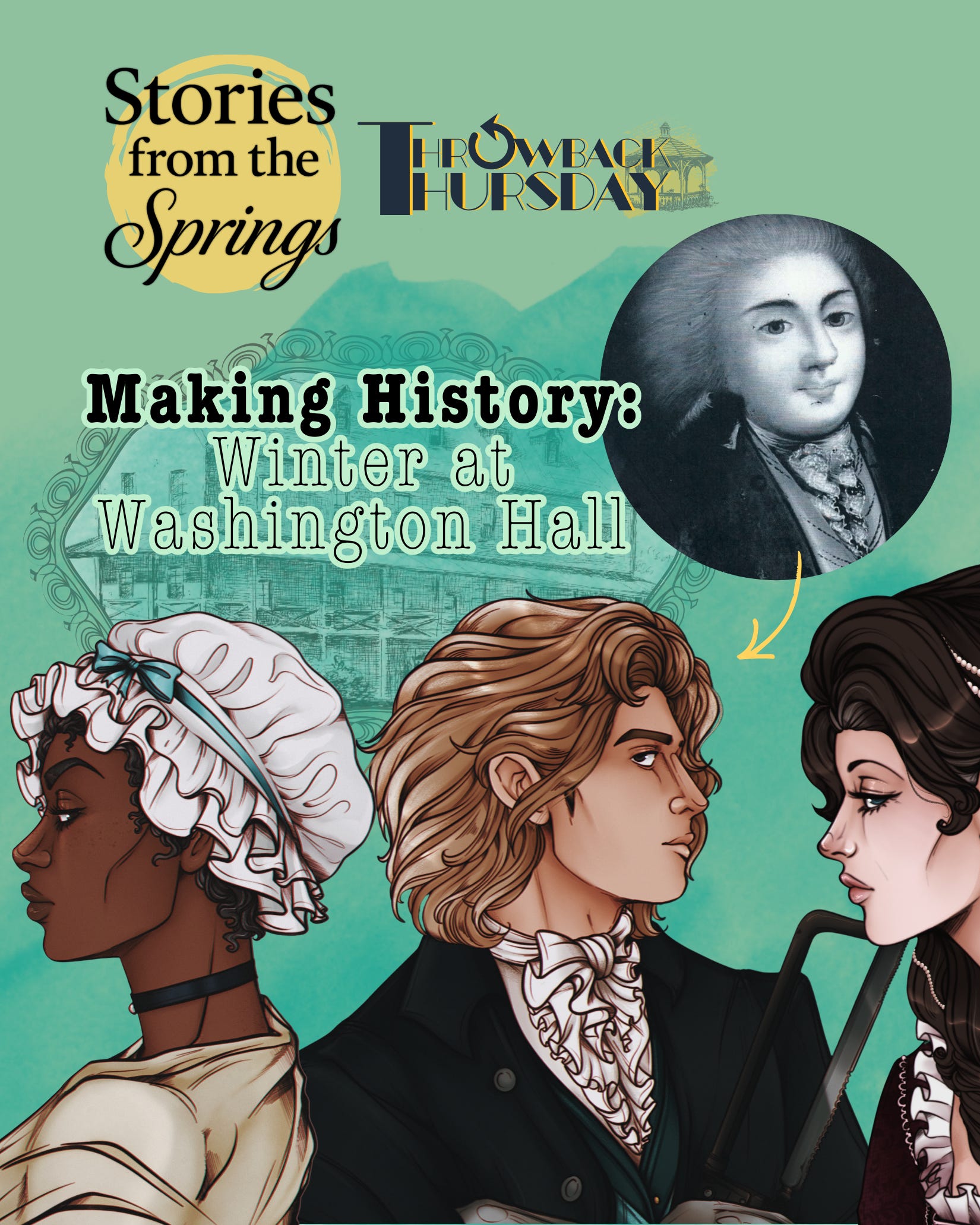
Art Imitates Life
In preparation for our upcoming exhibition on Washington Hall and the Revolutionary Winter of 1777-1778, the Moore Archives has been conducting extensive research into key figures who were present at Yellow Springs during that time.
Our exhibit (more information about upcoming shows can be found here) will be interactive and feature ‘playable characters’ that visitors can choose as they explore the exhibit in different ways. However, we encountered a challenge: many individuals we identified in our records do not have associated depictions, and in cases where images do exist, they often vary greatly in style.
To address this, we are researching what people at that time and place would have looked like and using this knowledge to reconstruct these individuals as faithfully and accurately as possible.
Our goal is to breathe life back into these long-forgotten stories and give a voice to those who have been silenced; as part of this journey, we aim to provide faces to the faceless.
Our archivist happens to have a deep fascination with facial reconstruction and historical fashion, both of which are very helpful to this undertaking, but we want to present these figures in a continuous, stylized art style that is both historically accurate and visually distinct. We began this process with the ‘cameo’-style portraits that visitors will see upon entering the exhibit.
Building Blocks
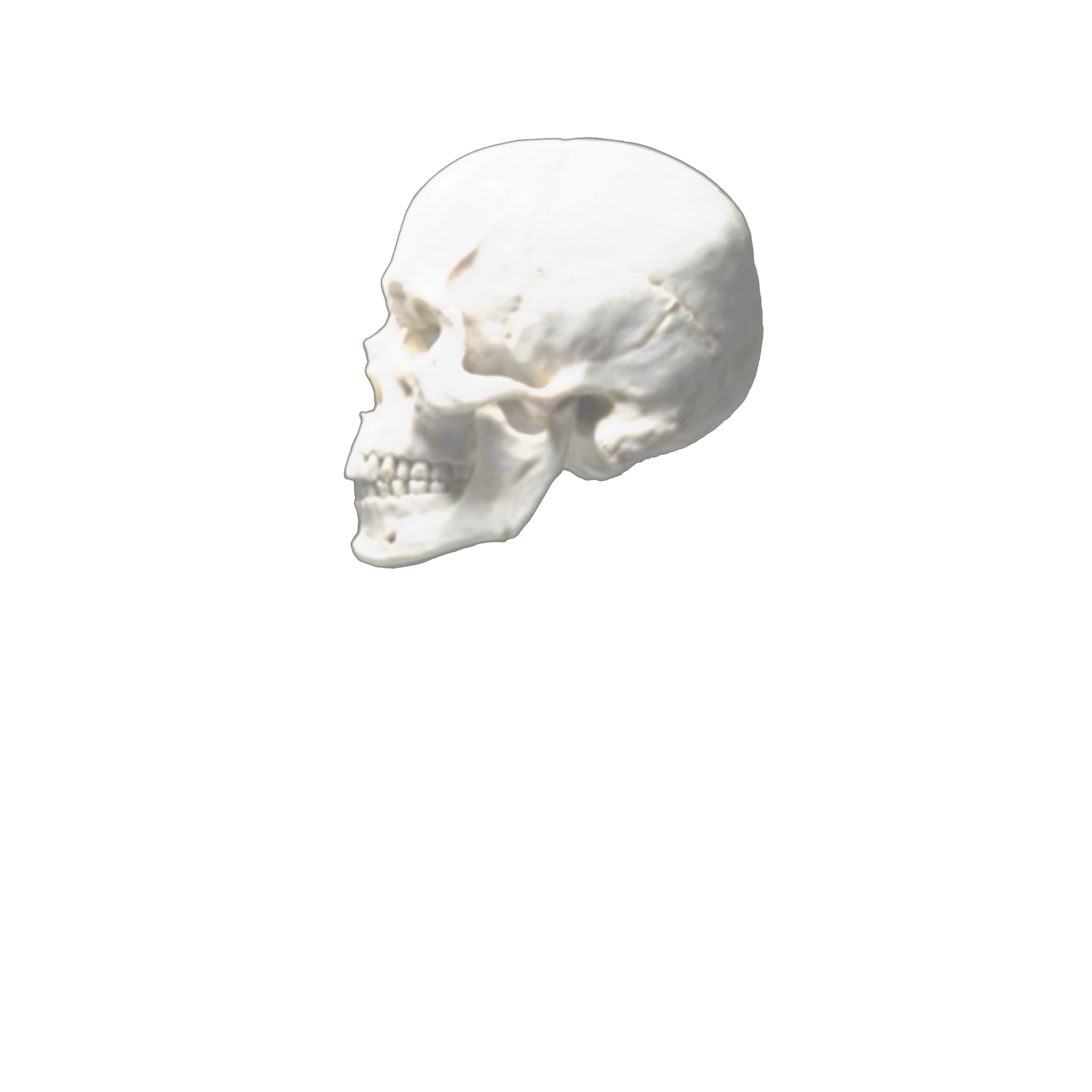
We started with a generic skull, so that we could keep the scale of the profile portraits consistent across all of our “characters”.
Next, we added simple ‘tissue markers’ to indicate where the average musculature of the face would be layered in, without adding too many distinguishing features.
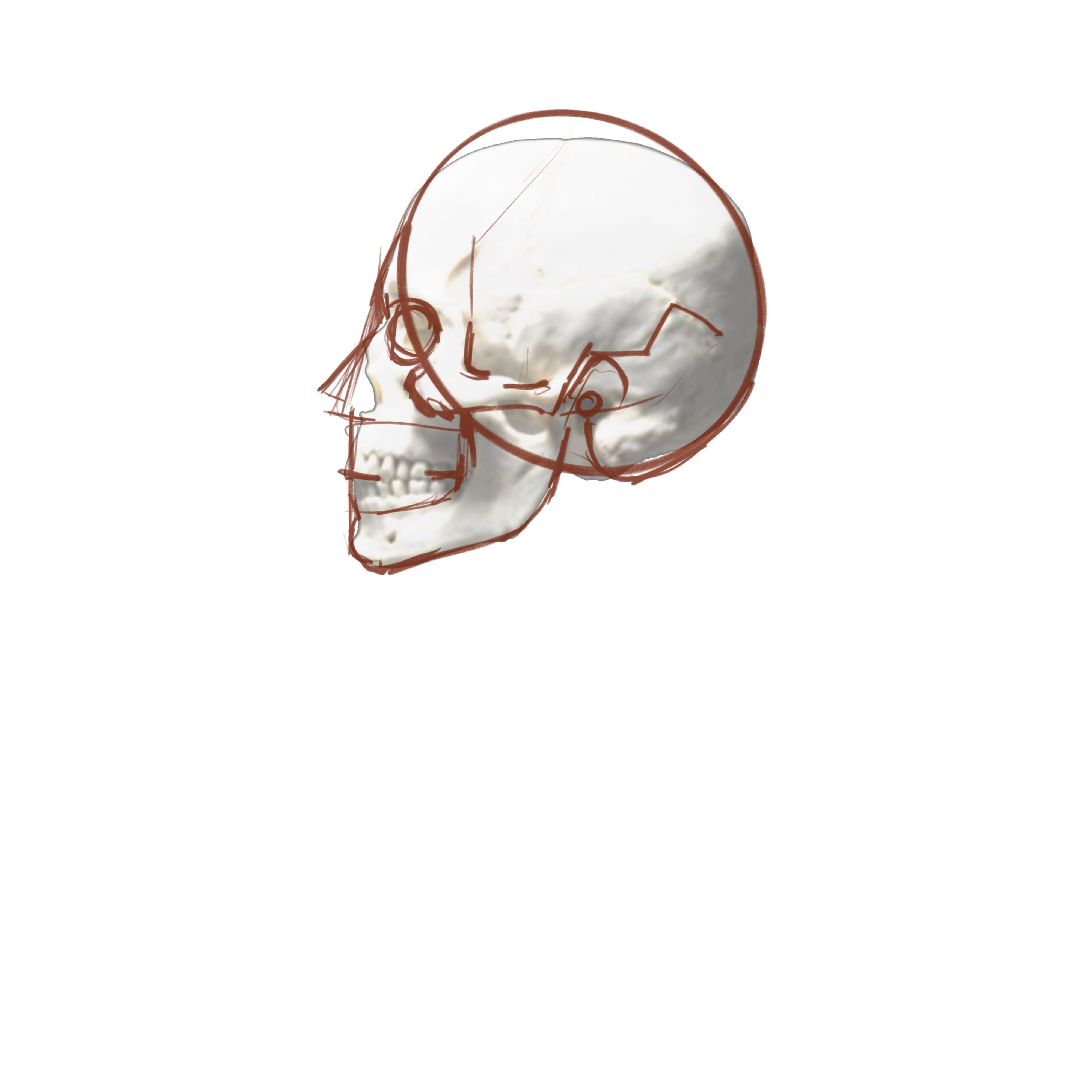
This underlying sketch will help us keep the placement and location of features consistent, while also demonstrating all of the beautifully varied and complex ways that people develop into unique-looking individuals throughout the course of their lifetime.
This art is also being created by our archivist, who selected a semi-realistic style that will both highlight the different faces of these historical people in a way that makes them look unique, but is also polished enough that it will be aesthetically pleasing and will visually match the rest of the exhibit.
Below are sketches done by our archivist as she blocks out basic faces and features of the people whose stories will be featured in the show.


Painting the Picture
In order to ensure that we depict these people with as much accuracy as possible, we did some deep research into any available imagery of these figures, their family history, any written descriptions, and consulted the history of fashion and war alike. By reading below, you can see the logic that was applied for each of the design choices we made for these “playable characters”.
The semi-realistic art style that we chose is also meant to both bring to mind modern-day digital art (as they were made using the painting program Procreate) but mixed a bit with the portraiture and engraving styles of this era. The line art is meant to be evocative of the etching technique of the 1770s, and the features that were chosen were meant to be emblematic of the facial features that these people would have had in life, but with an eye more on representing the general essence of the person and celebrating the beauty of their features, rather than photo-realism.
During this time period, if someone were to sit for a portrait, they would not have been expecting a photo-realistic, completely true-to-life representation of who they were, flaws and all. For example, we know that George Washington had scars from his battle with smallpox in Barbados, and while contemporary images of him are dubious- he has been widely depicted without them. We applied this pathos to the poses we chose and the way that our archivist depicts these people artistically. This “beautification” effect is intentional- and not just out of artistic stylization.
Reverend Dr. James Sproat
A key figure when it comes to primary sources documenting our time period of interest, the Reverend Dr. James Sproat served as the chaplain at Yellow Springs. In his diary, excerpts of which are preserved in the Moore Archives, he recorded his comings and goings as he visited a number of hospitals in the Middle Department.
The image below, showing Rev. Dr. James Sproat, was sourced from a helpful page1 that compiles a number of useful documents on the historical figure.

However, because we do not have a date for when this engraving was taken, in order to determine what Sproat would have looked like in 1777, we need to determine if this engraving was done soon after that time, or if it was done a while later. Lacking a date, our best option is to look into the company that the image was engraved for: W.P. Farrand & Co.
Doing a quick sweep of archival resources, both in the Moore Archives and from online, publicly available sources, we find that this company is has become fairly obscure. However, we were able to follow a lead to the archival website Hathi Trust. This website, similar to the Internet Archives, maintains digitized records that can be sourced from outside viewers. By searching for ‘W.P. Farrand & Co.’ and making sure that we match the addresses to the one included in the engraving of Sproat, we found that the earliest date where this company was recorded was around 1794.

This excerpt, from page 534 of the ‘checklist of past engravers’ published as American Engravers Upon Copper and Steel, by David McNeely Stauffer (1907)2, mentions W.P. Farrand.
Intriguingly, this is also for an engraved bust in an oval, with a matching title as our image. This suggests they may have been in a set, which were likely commissioned during the mid 1790s and were originally published by J. Ormrod and were engraved by James Thackara and John Vallance of Philadelphia. At a later date, W.P. Farrand likely purchased the rights to recreate these images, and removed the date and the original publishers and engravers. Interestingly, we can also see that Benjamin Franklin was also engraved by Thackara & Vallance during 1794 as well.
The second earliest date that we see W.P. Farrand & Co. mentioned in is in the Reports of Cases Adjudged in the Supreme Court of Pennsylvania: 1799-1814 (Vol. 1), by Horace Binney3, where W.P. Farrand & Co. are the publishers.

This is the earliest reference to William P. Farrand and Co. that we can find where Farrand is mentioned in a company context, and this dated to 1809. This indicates that our 1794 date for the engraving, prior to W.P. Farrand & Co. obtaining the rights to reproduce the engravings that Thackara & Vallance did, is likely the earliest date that these engravings could have been done. So, by this process, we can say that when Reverend Sproat sat for his engraving, it was 1794 at the latest.
For an additional caveat, in our archives we have excerpts from Sproat’s journal while he was the Hospital Chaplain of the Middle Department during 17784. This was published in an article by John W. Jordan in 1903, and in the preamble to the excerpts, Jordan gives a brief biography of Sprout’s life. Jordan says that Sproat died (due to yellow fever) in Philadelphia on October 18, 1793. This date is confirmed by several other sources, so if the engraving featuring him was published in 1794 along with Thackara & Vallance’s works featuring Benjamin Franklin and John Howard, this was likely the last image captured of Sproat before his death.
Regardless, our area of focus is the winter of 1777-1778, so conservatively, this is an image of Sproat about sixteen years after he spent time as the chaplain at Yellow Springs. He is a much older man in this image than he would have been at the time.
Sproat was born April 11, 1722, so during the winter of 1777-1778 and during the early spring of 1778, he would have been around ~56 years old. While not a young man like John Rose, Sproat would have still been middle aged during our time period, and in the above engraving, he would have been in his early 70s. Features of his attire, such as his powdered wig, are rather formal and indicate a formal sitting. While contemporary images of what hospital chaplains would have worn during this time period are quite difficult to find, we were able to find this image of a chaplain at Valley Forge, created by artist William A. Smith, who was prolific during the 1930s.

The image depicts George Washington and the Continental Army praying with Washington’s chaplain (likely Israel Evans) at Valley Forge. Notably, the chaplain in this image is dressed in the minister’s clerical attire congruent with the Presbyterian denomination, but he lacks a powdered wig. If this is Evans, other images of him that are more contemporary to the time he was alive also seem to show him wearing not wearing a wig, so this may have been his personal style as opposed to a choice taken out of practicality.

That being said, depictions of James Caldwell, a Presbyterian minister who played a prominent part in the American Revolution, is often depicted wearing the typical colonial-style powdered wig that is often called to mind when one pictures important people of the time. The below image is illustrator H. A. Ogden’s depiction of James Caldwell, the “Fighting Parson”, during the Battle of Springfield (1780).

However, considering that wigs were not viewed as highly fashionable during this period, particularly since Philadelphia was under British control and Sproat was preforming his duty in incredibly lean times, we can reasonably assume that he probably did not wear a wig while he was making his rounds in the hospitals in this area.
Overall, during this time, Sproat would likely have resembled Smith’s depiction of Evans at Valley Forge. It is probable that he did not wear a wig, unlike Caldwell in Ogden’s illustrations. However, he may have adopted the practice in his later years, as wigs had somewhat returned to fashion by that time, especially for men of considerable influence and means. The attire depicted by both artists- the simple black suit with the distinctive Presbyterian clerical collar- is likely accurate to what Sproat would have worn on a daily basis. A contemporary engraving also suggests that Sproat continued to dress in this style throughout his later years.
How do We Depict Sproat?
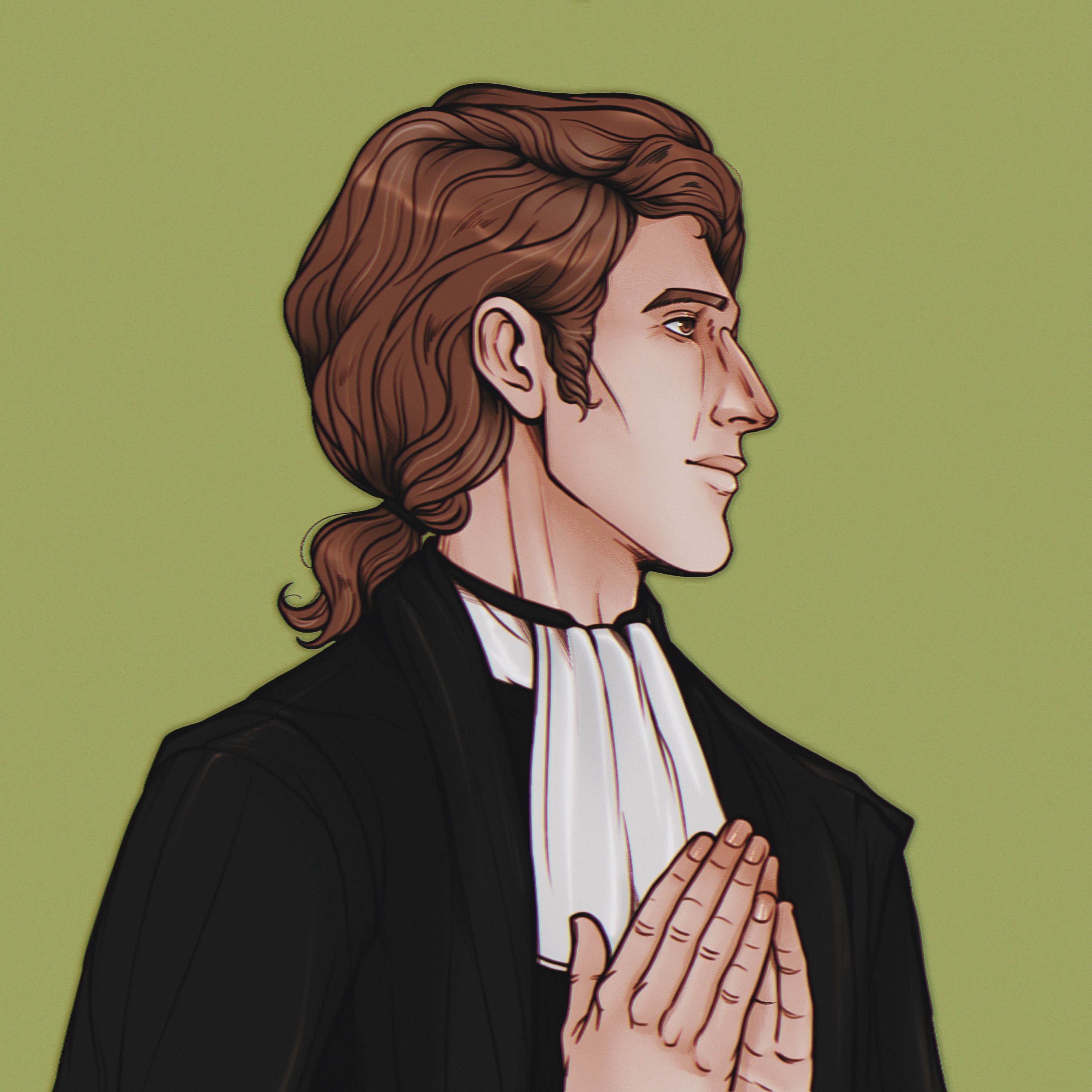
Though Reverend Sproat is depicted in his 70s in the contemporary engraving we have, our aim is to portray him in his mid-50s, the age he would have been during the time period we are focusing on. The engraving by Thackara and Vallance provides insight into how we should stylize him, showcasing several notable facial features. For instance, the chaplain has a strong, slightly Romanesque nose, less prominent brow ridges, highly pronounced cheekbones, and a slightly small, m-shaped mouth, where the upper lip is less full than the lower lip.
As people age, certain features may become more pronounced; however, the overall morphology of Sproat’s face would have remained distinctive. In our design of the chaplain, we will retain these distinctive features.
Unfortunately, we do not have access to any contemporary colored images of Sproat, so the coloration we choose will be completely speculative. This is true for most individuals featured in the exhibit. That said, we can make educated guesses about Sproat’s appearance by researching his ancestry. By tracing his family tree, we can determine the regions in Europe Sproat originated from and investigate the average coloration for people from those areas during that time period.
While publicly-sourced websites such as Find-A-Grave can sometimes be dubious in terms of accuracy- for example, the page for Sproat himself features an image of an unrelated man in attire from a later era- they can still be very helpful when used with caution. From this website, we learned the names of the chaplain’s parents: Lt. Ebenezer Sproat (born May 1676) and Experience Hawes Sproat (born September 24, 1686). Both were originally from Plymouth County, Massachusetts. Judging by his mother’s distinctive, very ‘Pilgram’-ey name, and the winged deaths’ head iconography on his father’s headstone, it is likely they were part of the Puritans who settled in Plymouth after the famous voyage of the Mayflower.
Looking further back, we found that Sproat’s maternal grandmother, Desire Gorham Hawes, was descended from English nobility, including King John of England, who signed the Magna Carta. Desire Gorham Hawes’s mother, also named Desire, was the eldest daughter of John Howland and Elizabeth Tilley, two notable passengers of the Mayflower.
While this connection may initially seem unexpected, it is not surprising that a prominent figure like Reverend Dr. James Sproat would have such an esteemed ancestry. This information allows us to identify him as English, with Puritan and Pilgrim roots originating in the West Midlands and East Midlands regions of England. Although this area has become increasingly diverse today, during the early 1600s, its inhabitants likely had a genetic makeup consisting of a blend of Anglo-Saxon, Norman, and Celtic influences.
Therefore, for our purposes, Sproat would likely have had a fair complexion, with hair that could have been either red, blond, or brown. To represent him, we’ve chosen to effectively split the difference: giving him sandy, slightly reddish brown hair (streaked with a bit of grey to show his age) and light brown eyes.
Sarah Ruston Kennedy
As the wife of Dr. Samuel Kennedy, Sarah Ruston Kennedy would have been central figure for the more genteel aspects of Washington Hall. While it served as a General Hospital- and the situation there did get rather hectic and dire- it would have also served as the headquarters for the Hospital Department during the Revolutionary War.
This meant that while the doctors, nurses, surgeons, apothecaries, and surgeons’ mates would have been working tirelessly to save the lives of sick and injured soldiers, influential men of the Revolution- such as Dr. Johnathan Potts and Dr. William Shippen- would have been visiting Washington Hall as well. These influential men had to be hosted at a certain level of style and decorum, and as the lady of the house and the wife of the man who had been appointed chief surgeon of the General Hospital, Sarah would have been responsible for hosting them with a level of prestige that they would have been accustomed to. While the war wore on and things got dire, we know that small instances of elevated social graces were still important to people who were part of the planter class. Though Samuel and Sarah Kennedy had lost their primary residence in Whiteland to British looting, they still definitely would have been in these sorts of social circles.
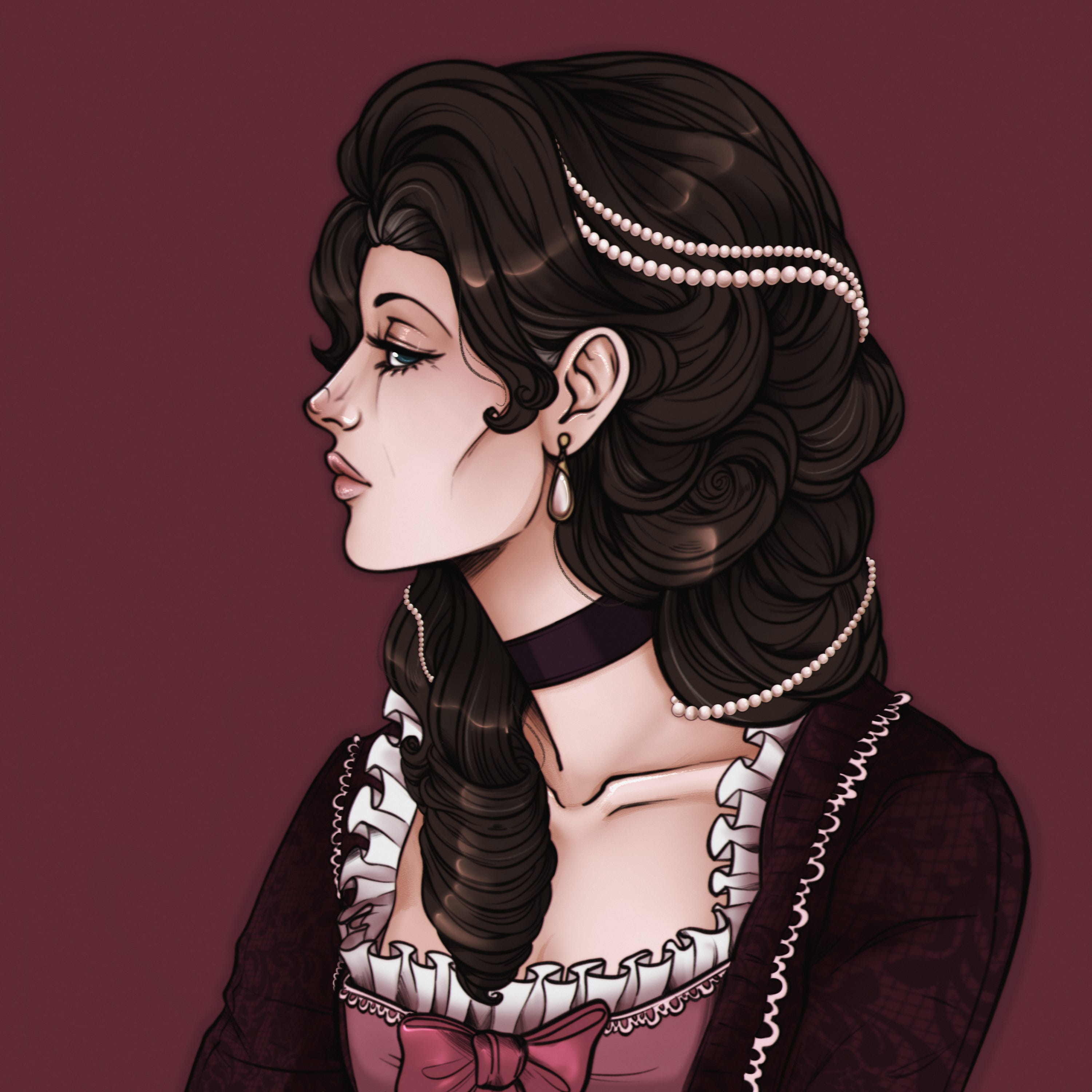
Sarah Kennedy herself was the daughter of one of the most wealthy and influential men in Chester County- Job Ruston- and her younger brother, Dr. Thomas Ruston was a personal friend of Benjamin Franklin. She would have been a high-class lady, and would have modeled herself and her fashion of her peers of the era. For women like Sarah Kennedy, their fashion choices were more than following trends- they were a level of social pageantry and commentary and away to elevate her personal agency and individuality.
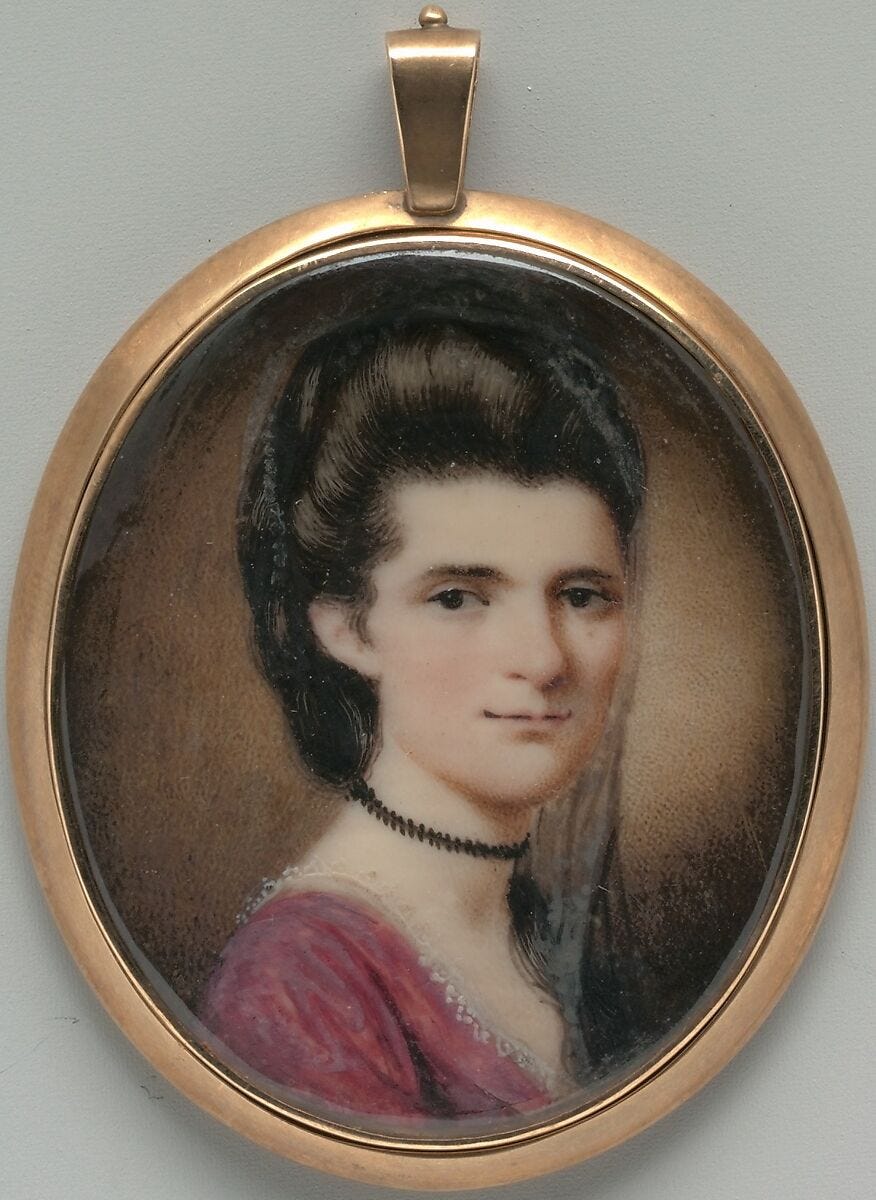
Though no surviving portraits of Samuel Kennedy or Sarah Kennedy survive today, we can learn a lot about what would have been fashionable for women in the colonies of this era by looking at contemporary portraiture of women who would have filled a similar role to Sarah Kennedy.

The Metropolitan Museum of Art hosts several public domain images that are available to use for reference. The image above depicts an unnamed upper-class woman from 1778, and we can see that she has been depicted with a very intricate hair style, and has pearls in her hair and delicate lace on her dress.
By looking at contemporary portraits like the one above, we get an idea of what kind of attire would have been fashionable at the time. By combining these with historical research on fashion of the era, we were able to craft the sort of ensemble that Sarah Kennedy would have worn- to look her best, and more importantly- to impress her guests.

How do We Depict Sarah?
Tracing Sarah’s lineage reveals that she is predominantly descended from people in North West England. During the period when her ancestors lived there, the average individual from this region likely had fair skin, which made them highly prone to sunburn, as well as hair that was usually mousy brown, with darker shades approaching black also being common. People from this area were historically noted to have blue or brown eyes, and their appearance has often been attributed to a significant amount of Welsh ancestry resulting from historical relocations. A cursory historical overview suggests that individuals from this region tended to have small and delicate features.
In addition to her North West English roots, Sarah also has ancestry from Kent, England. This area has historically hosted generations of people with diverse backgrounds, including Mesolithic hunter-gatherers, Neolithic farmers, Anglo-Saxons, Vikings, and Normans. Consequently, this can result in a wide range of physical appearances, although there is again a general observation of a delicate appearance among the populace. It is important to acknowledge that the people who documented these observations likely identified with the subjects of their writing, so we should view these accounts with a pinch of salt- though they are valuable to us, today, as we try to reconstruct these people with fidelity and honesty.
Unfortunately, we do not have recorded descriptions of Sarah herself. However, on her mother’s gravestone (which has since been lost to time), there was once a poem inscribed that praised her looks highly, among other attributes.
“The dame that lieth underneath this tomb,
Had Rachel's face, and Leah's fruitful womb,
Abigail's wisdom, Lydia's open heart,
With Martha's care, and Mary's better part.”— Inscription on Mary Baker Ruston’s tombstone
For those not up to speed with their Biblical trivia, the Rachel mentioned above is a character from the Old Testament who was famed for her almost supernatural beauty.
While such flowery language for the dearly departed is not uncommon, Job Ruston, Sarah’s father, did not seem to praise the beauty of his subsequent wives on their respective headstones (yes, he did outlive two additional wives), at least not in the same way that Sarah’s mother was honored.
Due to this heritage and the genealogical tracing we have conducted, our archivist decided to give Sarah delicate features alongside a smaller frame. Nevertheless, Dr. Kennedy’s will and estate records indicates that Sarah may have had a more ‘sporty’ side, as she had a specific saddle for riding horses, suggesting an active lifestyle. Therefore, we aimed to balance her slender body type with a level of fitness that would have been considered fashionable at the time.
Rina (Surname Unknown)
From our records, we know that during the winter of 1777-1778, while Washington Hall was being built and used for the first time, at Yellow Springs, there were at least three enslaved people. One of these enslaved people was a middle-aged woman named Rina.
Rina was most likely around 40 years old at this time, and considering how slavery worked in Pennsylvania at the time- and the kind of household that the Kennedy family had- she would most likely have served as a domestic servant and a lady’s maid.
Slavery in America is a dark and despicable chapter in our history, but when we do not acknowledge it, we also do not acknowledge the lives of the people who suffered the most under that system. That being said, while Rina would have lacked freedom, she would not have been subject to the same kinds of horrors that come to mind when one thinks of slavery in America. This was not the same kind of chattel slavery that proliferated in the antebellum South; up in the North, during the 1770s, women like Rina would have been relegated to property- but they were extremely expensive property. Having a slave to serve in domestic life would have been a status symbol. As abhorrent as this is from a modern standpoint (and from a moral standpoint), these were the circumstances that Rina lived in- and Washington Hall would not have changed that.
To get a further glimpse into what kind of life Rina would have lived, we can look at the early life of Phillis Wheatly, an enslaved woman from Boston who was a contemporary to Rina’s time.

The reason that we know so much about Phillis’s life is that the Wheatly family- the people who enslaved her- chose to educate Phillis and she learned how to read and write. Phillis was brilliant, and her great skill as a poet made her somewhat of a celebrity in her day. Before she found recognition, though, Phillis’s life was defined by her domestic work. Because Rina and Phillis would have embodied similar stations, we can use the surviving image of Phillis above- and, of course, historical research- to determine the kind of attire that Rina would have worn.
How do We Depict Rina?
We chose to highlight Rina in our exhibit purposefully- though the specifics of her life are incredibly difficult to track due to her enslaved status, what we know about her, even from a basic historical lens without specifics, meant that she lived a life filled with far too little freedom, far too many tragedies, culminating in an existence that was horrifically easy to almost erase. When selecting which voices from our archives to echo in this exhibit, Rina was one of our first choices. However, because of her life’s circumstances, we know very little about Rina.
The slave records established in Pennsylvania after the gradual banning of slavery in the state in 1790 list Rina as a mulatto woman around ~45 years old, enslaved to the heirs of Dr. Samuel Kennedy. In Dr. Kennedy’s estates’ index from 1778, Rina is recorded as being about 40 years of age. Record-keeping for enslaved individuals at that time focused far more on ownership and legal status than on biographical or genealogical histories, and this was largely on purpose.
For our purposes today, we will consider her to be approximately 40 years old in 1777-1778, which would make her roughly 52 years old in 1790. Disturbingly, her age may have been rounded down to increase her value as “property.” Since we have access to the original document (albeit in photocopied form) of Kennedy’s will, we will treat this primary source as definitive regarding Rina’s age.
Regarding her physical appearance, the only official description we have is that she, along with Lucia and Kitte, is classified as “mulatto.” This designation indicates that she had one parent of enslaved African descent (always the mother, according to the laws of inheritance of the enslaved status at that time) and one parent who was considered white. Given Rina’s age, the absence of a recorded surname, and our current understanding of the her history- Sarah’s father, Job Ruston, owned over 100 slaves during his lifetime, and Rina likely came with Sarah once she and Samuel Kennedy got married- we can make some speculative connections about her potential parentage.
Rina is one of only four recorded slaves in the Kennedy household, and one of them- a man named Prime, classified as “negro”, indicating there is no potential familiar connection between him and any of the people who owned him because he would not have been mixed- appears to have disappeared from the records before the Kennedy family acquired Yellow Springs in 1774.
Whereas Prime has disappeared almost completely from the records, Rina, along with Lucia and Kitte (who were much younger and potentially Rina’s daughters), remains documented until 1790. Although highly speculative, the fact that Rina, Lucia, and Kitte were indicated as “slaves for life” in the 1790 records; while other enslaved individuals in Yellow Springs and Chester Springs were marked for freedom once they turned 31- raises questions about what motivated that decision.
This could suggest either a simple refusal to ‘give up’ valuable economic ‘investments’, it could suggest horrific but unsurprising cruelty, or- potentially more disturbingly- it could suggest a warped sense of connection.
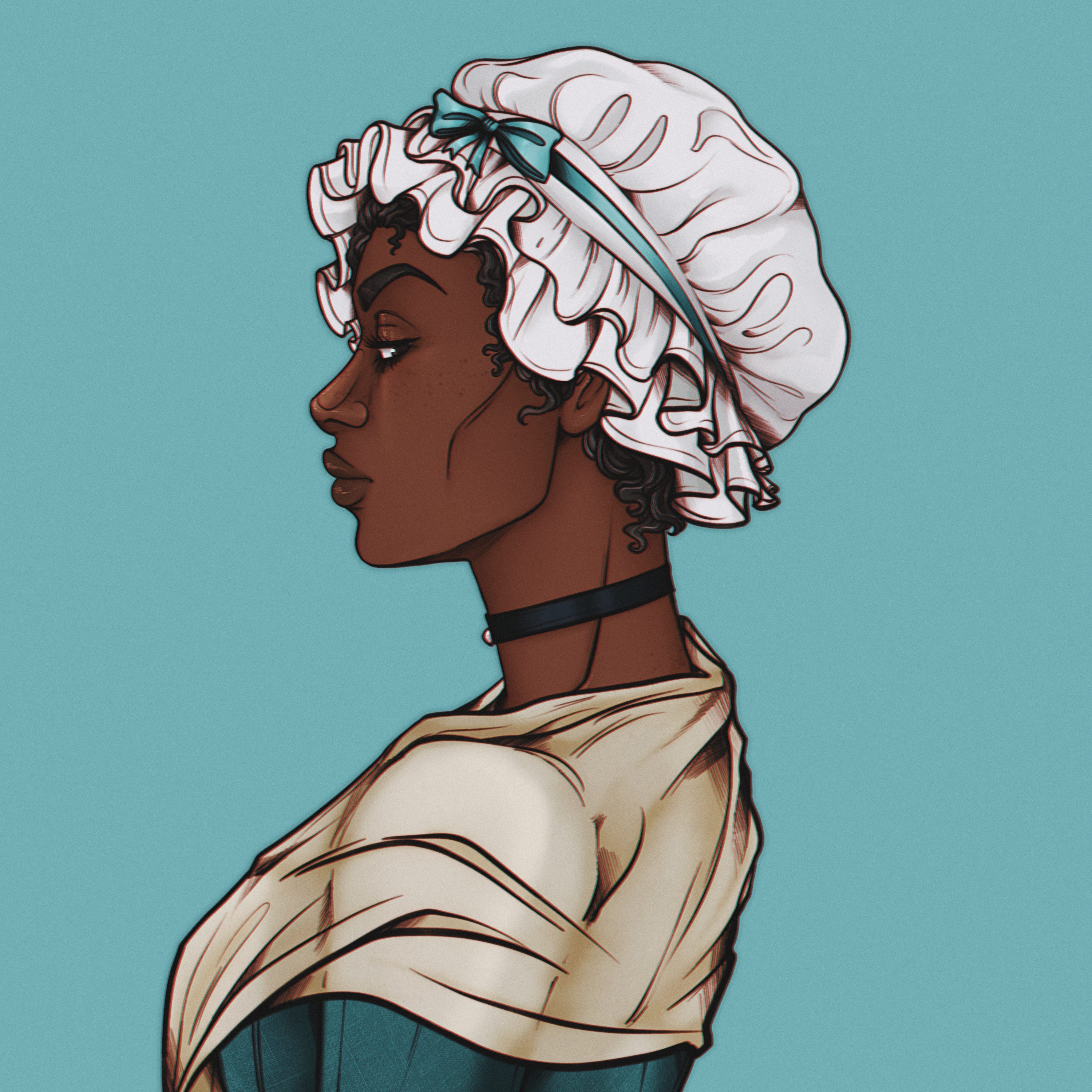
While we will never know the true motivations behind the decision to keep Rina, Kitte and Lucia enslaved, the information here paints a complex and tragic picture. For this reason, we chose to use features and posing that hints at a possible familial resemblance between Sarah and Rina- if you squint.
But regardless of if Rina and Sarah truly shared a father, as an independent figure in our story, we chose to give Rina features that closely reflect the realities of the circumstances of the world that she lived in.
Considering that most enslaved individuals during this period had ancestors from West Africa and West Central Africa, spanning the Gold Coast and reaching into the Congo, we were able to piece together where Rina’s ancestors would likely have come from.
People from this region represent a mosaic of different ancestral cultures, including the Akan, Mole-Dagbani, and Ewe peoples from Ghana; the Hausa, Songhai, Tuareg, and Arabian influences from Nigeria; and a rich mix of more than 200 ethnic groups predominantly from Bantu-speaking cultures in the Congo. Generalizing broadly (as Africa has an extremely wide range of genetic lineages due to its place as the stage in which early modern humans evolved), people from this part of Africa tend to have dark brown or black hair, dark brown or black eyes, and dark skin- with textured hair that ranges from coarse and tight to curly and voluminous.
As a woman of mixed European and African ancestry, we chose to depict Rina with strong and beautiful features representing both sides of her heritage. Her hair is tied up in a cap, reflecting the fashion expected of ladies’ maids, working women, and household staff during that era. To demonstrate the status of her household, Rina likely would have been fairly well-dressed, so we gave her cap a bit of embellishment and a fashionable choker-style necklace, which matches the style that we have given to the “lady of the house”.
Abigail Hartman-Rice
Those who are familiar with the history of Chester County, with the important women of the American Revolution from this area, or who are members of the Rice or Hartman-descended families are often already familiar with Abigail Hartman Rice. She is well known for good reason. Abigail’s story at Yellow Springs is one of the most quietly powerful human stories connected to Washington Hall, because it reflects the kind of labor that rarely appears in military records but without which the hospital could not have functioned.
At Washington Hall and throughout Yellow Springs during 1777–1778, Abigail served as a nurse and civilian support figure. She helped care for sick and wounded soldiers and worked with other local women to gather food and supplies from surrounding farms at moments when the hospital was critically strained. Her role placed her squarely within the informal but essential care network that sustained the Continental Army’s medical operations in this region.
Over the course of her lifetime, Abigail gave birth to 22 children, 17 of whom survived to adulthood. She married her husband, Zachariah Rice, when she was only 15 years old, only a few months after she was confirmed into adulthood at her local Lutheran church- and spent much of her adult life pregnant. Abigail spent much of her life nursing infants, or caring for children, while also maintaining a working farm household.
That context matters. When Abigail nursed injured and dying soldiers at Washington Hall, she did so as a woman already accustomed to constant caregiving, physical exhaustion, and emotional endurance. Her compassion was not abstract- it was practiced daily, under pressure, and often at personal cost.
In 1777, Abigail would have been in her mid-to-late thirties, and given the size and spacing of her family, it is highly likely that during her time assisting at Washington Hall she was either pregnant or had given birth relatively recently.
This reality underscores the extraordinary nature of her contribution: her work at the hospital was layered on top of the physical demands of repeated childbirth and early childrearing.
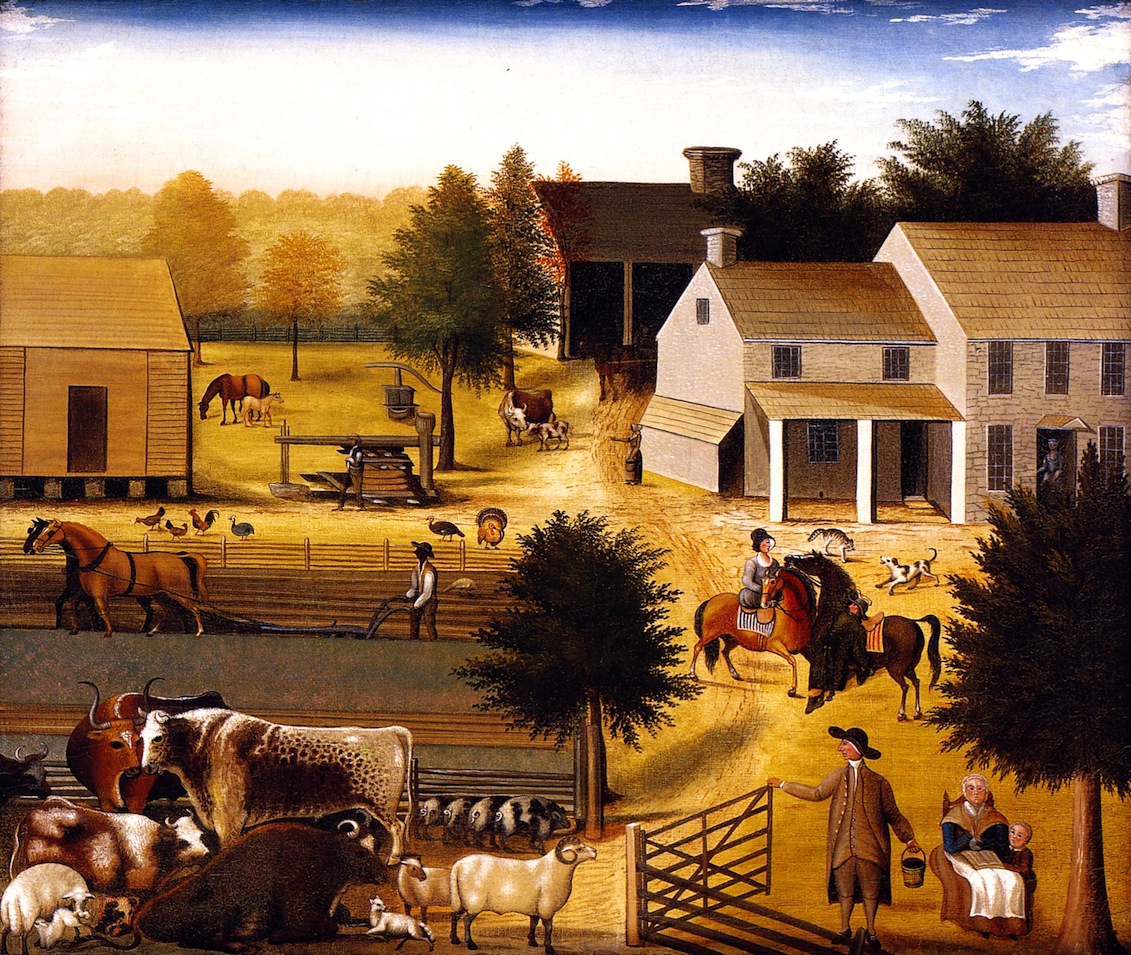
Abigail and her husband were part of the German-immigrant yeoman farming community that defined Yellow Springs in the late 18th century. They were farmers- neither elite nor impoverished- but solidly middle-class by rural standards, well established and trusted within their community.
While families like Abigail’s would have been popular subjects form early American folk artists (such as the example image below), we do not have any surviving depictions of Abigail herself.
How do We Depict Abigail?
While we have an extensive record of Abigail’s descendants, thanks to the meticulous genealogical work they have done- we don’t need to look far into Abigail’s ancestry to know where she came from. Her family was German, and she was a first-generation immigrant. The area around Yellow Springs was home to a large amount of German immigrant farming families, and Abigail and her family seemed highly emblematic of a colonial American woman from precisely this time and place.
Recorded in life as being a well-built, short woman, we chose to give Abigail softened features. However, for her coloration and attire, we chose to pay homage to the lovely depiction of Abigail Hartman-Rice by Hannah Schmidt, an actress from the SALT theater- also located in the town of Yellow Springs- as she appeared in WHYY’s feature on Washington Hall.
The attire that the actress chose was also very accurate to the kind of attire women like Abigail would have worn at the time. We are incredibly grateful to have partnered with both WHYY and the SALT theater to have brought Abigail back to life for a moment, so we wanted to give a nod to that vision of Abigail as well.
“John Rose”
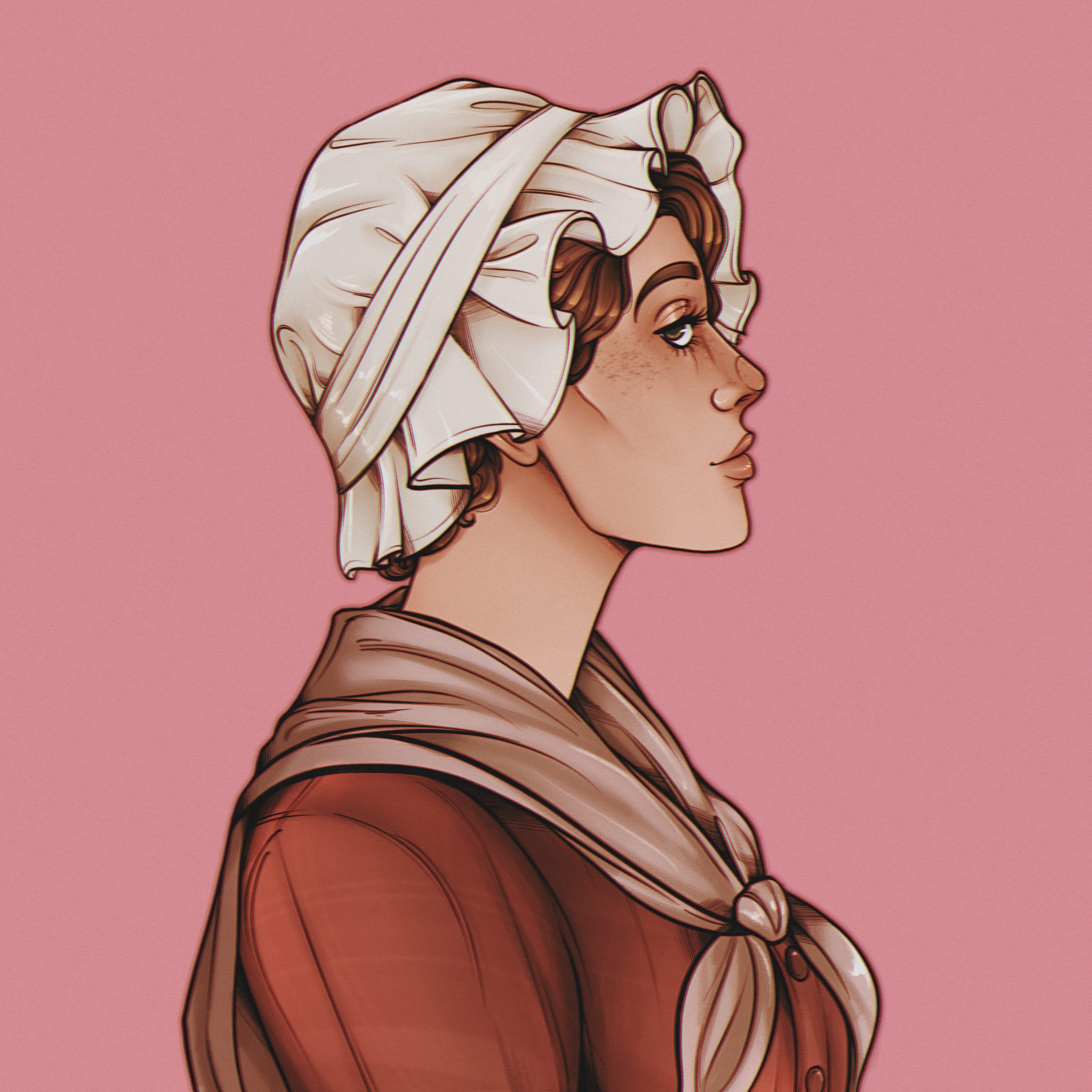
Most visitors do not arrive at Yellow Springs knowing the name John Rose- and yet his story is one of the most quietly dramatic, and improbable, connected to Washington Hall. What appears at first to be the story of a young surgeon’s mate is, in reality, a story of reinvention, exile, and a life lived under an assumed name.
John Rose was born in 1754 into Baltic nobility as Gustav Heinrich von Wetter-Rosenthal. As a very young man, he became entangled in a violent incident at the court of Catherine the Great, where he shot and killed another noble in a duel. Whether the act was driven by honor, politics, or desperation, its consequence was absolute: flight. To survive, he abandoned his title, his name, and his past, and fled to America under the assumed identity of John Rose.
When he arrived in the colonies, and finding himself in need of employment, Rose decided he would become a doctor. He came under the mentorship of Dr. Charles Frederick Wiesenthal, a respected Baltimore surgeon, personal friend of Dr. Bodo Otto, and the inventor of the first mechanical device for sewing. When Washington Hall was being built, and Otto was planned to be sent there, Wiesenthal sent his mentee to Yellow Springs in advance. During 1777–1778, Rose was only 23 years old, and he arrived before Otto did. He found that the hospital had not yet been built, “rebel” hospitals housed in barns, and a sense of can-do anticipation. He is recorded to have met and then worked closely Dr. Kennedy, forming a professional and personal bond that appears to have been deeply significant.
Kennedy’s illness and death seems to have deeply impacted Rose hard. Shortly afterward, Rose abandoned his post at Yellow Springs. He was subsequently court-martialed, became a privateer on a ship called Revenge, went on a number of additional military campaigns, and somehow found his way back to the Boltons, became a Baron once again, and lived to a very old age.
Rose’s life was so full of intrigue and adventure that it seems almost surreal, but he was a real person who truly did serve as a surgeons’ mate at Washington Hall. Because of his stature, we do have an image of what he looked like, though it was as a much older man.

The above is a Baltic Baron for sure- but while he was here, Gustav Heinrich von Wetter-Rosenthal was not the stately, older nobleman he is depicted as in that image. Here, he was simply the surgeons’ mate John Rose.
How do We Depict Rose?
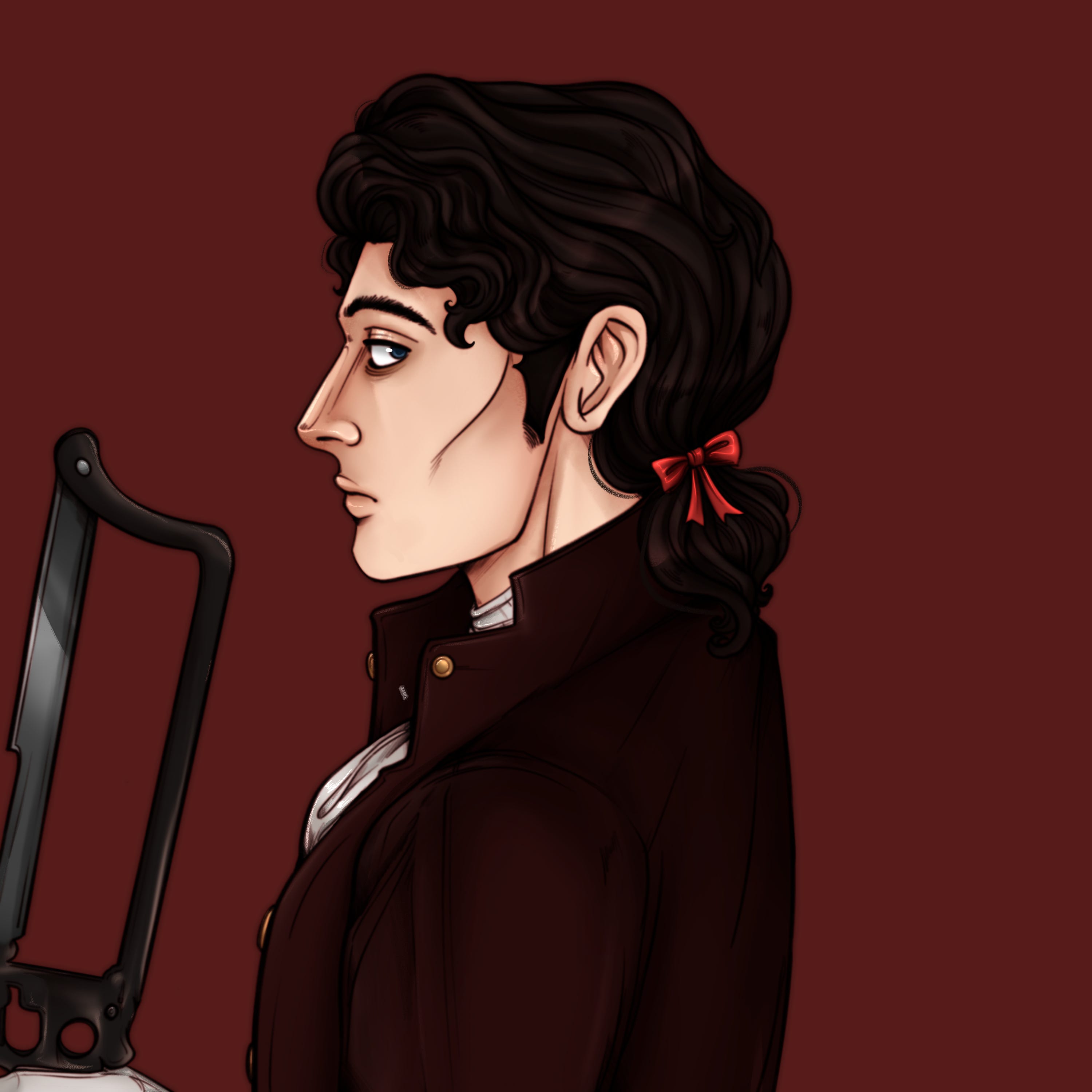
Much of what we know about John Rose comes from the book Incognito: An Affair of Honor, written by Mardee de Wetter. This well-written and well-researched book chronicles much of John Rose’s life, and depicts an image of the baron on its cover. Unfortunately, we were not able to determine whether or not this is a contemporary image or if it was an image that was created to be used as the cover. However, de Wetter’s research describes John Rose as looking like a slim, tall young man with dark hair, so the coloration of the man on the cover is also the coloration that we chose to give John Rose.
By comparing this with the image of Gustav von Wetter-Rosenthal above (from much later in his life), we were able to determine the kind of facial features he would have had during his time serving as a surgeons’ mate at Washington Hall. His strong nose, strong cheekbones, rounded eyebrows and hairline were effectively de-aged but kept in tact.
We then dressed him in attire of the upper-middle class, gave him a common hairstyle for men at the time, and depicted him holding a surgical saw- all choices Gustav von Wetter-Rosenthal could very likely have made to have given himself an unremarkable appearance while masquerading as the perfectly un-suspicious surgeons’ mate, John Rose.
Bodo Otto Jr.
Many people today who are interested in Early American medical history and the Revolutionary War in Chester County- and those interested in the history of Yellow Springs itself- will probably recognize the name Bodo Otto. While rightfully well-remembered, Bodo Otto Sr. was not the only Bodo Otto at Washington Hall. In 1777, Bodo Otto Jr. accompanied his father to Yellow Springs, a young physician who had been trained from childhood for medicine and who arrived here already carrying responsibilities far beyond his years.
Otto Jr. was born in 1748 in Germany, and raised inside his father’s medical practice, alongside his two brothers. From an early age, he apprenticed under Dr. Bodo Otto Sr., observing patients, assisting with treatments, and absorbing the realities of 18th-century medical care long before most young men chose a profession. By his late teens, after his family had immigrated to the American colonies, he was studying at the Medical College of Philadelphia and training in the clinics at Pennsylvania Hospital- part of the first generation of American physicians to receive structured medical education. When he earned his medical degree in 1771, he did so already seasoned by years of practical experience under his father’s supervision.
By the time the war reached Yellow Springs, Otto Jr. was not a novice. In 1777–1778, at just 28–29 years old, he was a fully trained military surgeon serving alongside his father and brothers, trusted to operate independently in crisis conditions. He served at hospitals like those at Trenton and Valley Forge, and came with his father to the General Hospital at Yellow Springs.
While he treated soldiers here and at Valley Forge, his own family life was unraveling. In 1778, his home in New Jersey was burned by British sympathizers while his wife and children were inside, forcing permanent displacement. That same year, his young son died. Otto Jr. never returned to the life he had built before the war.
He continued to serve until 1781, even as his health declined. When he died of tuberculosis in 1782 at the age of 33, likely a disease he caught while in the wards, and he left behind not just a family, but a record of service that had unfolded almost entirely in the shadow of war. In New Jersey, he is remembered as a hero, and with the descendants of the Bodo Otto line, he is remembered as an ancestor.
Our task, here, though, is to imagine him as he would have been in 1777- and to imagine what he would have looked like.
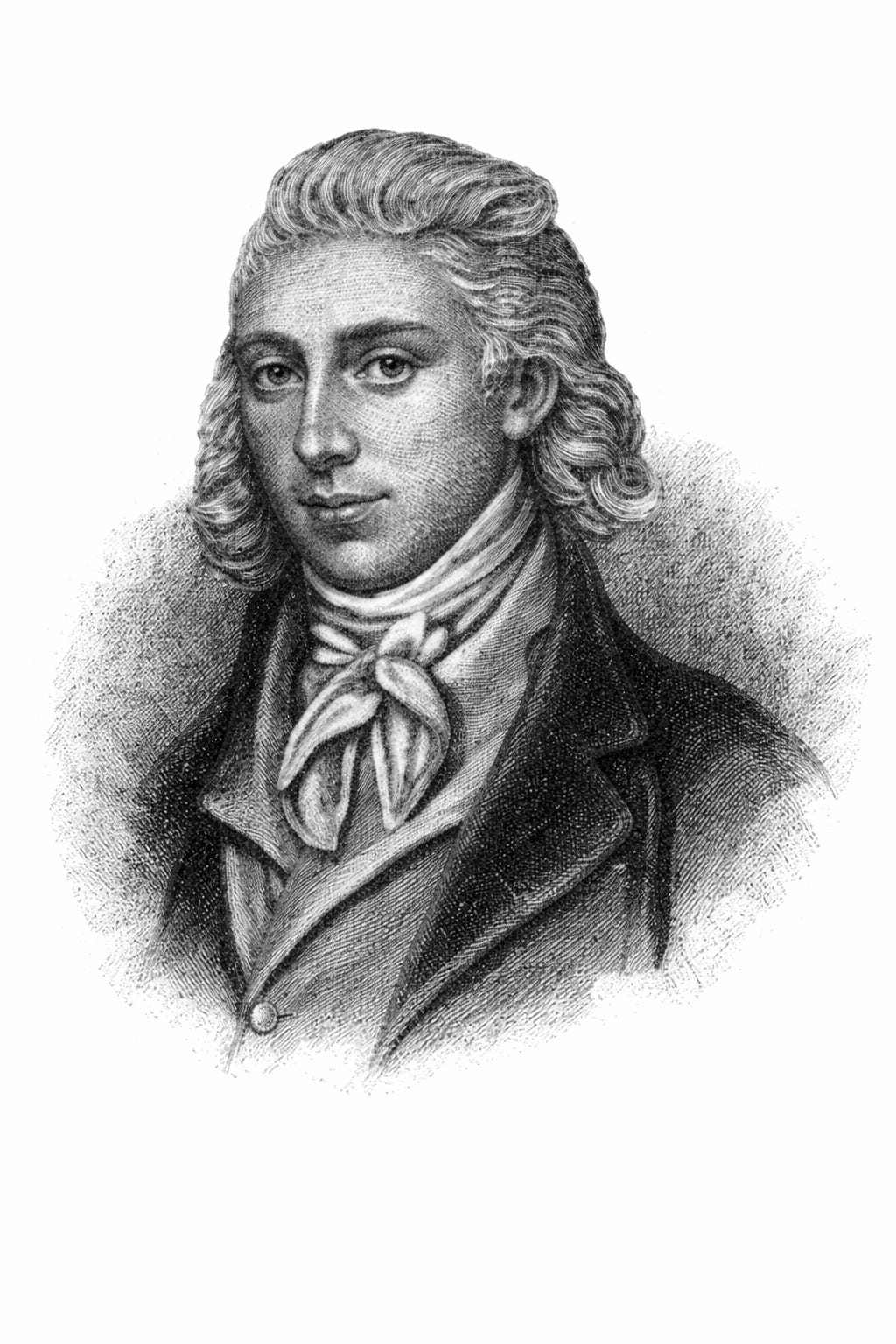
There are several depictions of what Dr. Bodo Otto Jr. Would have looked like, so this gives us a great place to start.

How do We Depict Otto Jr.?
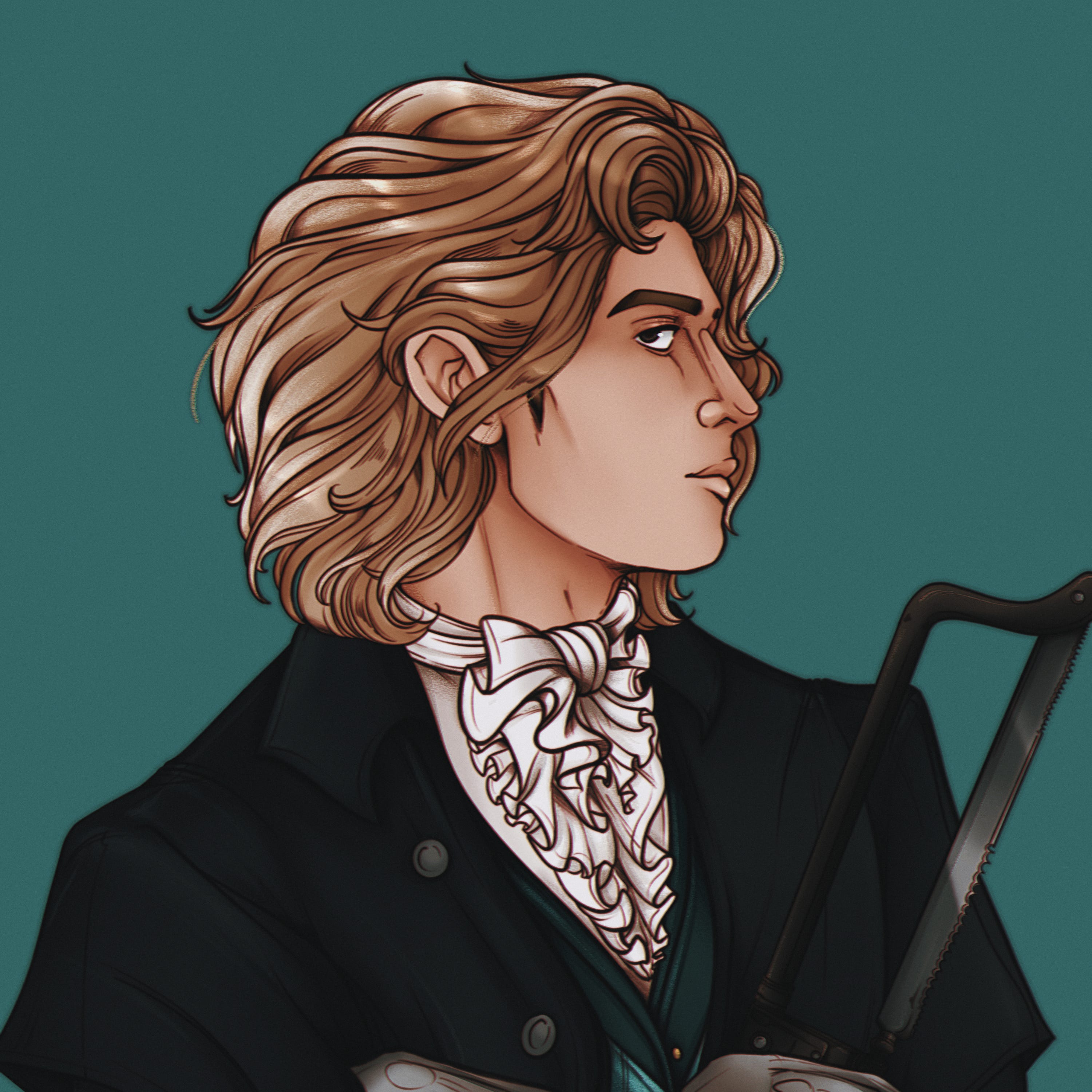
While our two images of Bodo Otto Jr. are fairly different-looking from each other on the surface, when we consider the features that each artist chose for him, we can see a common thread. In both images, he has a fairly rounded and wide face, eyes that look slightly hooded and fairly circular, notable eyebrows, and a straight nose bridge that fans out towards the nostrils. His mouth, in both images, is very distinctive, so we aimed to match its shape as closely as possible in these different artistic styles.
While there do exist later colored images of Dr. Otto Jr. (such as this one), the coloration of the image appears to be entirely speculative. That being said, while we do not have full color images of Dr. Otto Jr. from the time when he would have been at Yellow Springs, we do have something that we don’t for any of the other people we have chosen to focus on for this exhibit: a full-colored contemporary image of his father.

The above image is what we believe is the least-retouched version of the portrait painted of Dr. Otto. While we have a reproduction of the painting (generously donated to us by decedents of Dr. Bodo Otto himself) in our collection, the image appears to have been altered and smoothed over time, so we chose to rely on this version of the image since it would have been closer to what Bodo Otto looked like in life.
This would have been Dr. Bodo Otto Sr. at an earlier point in his life- it appears to have been commissioned, along with his wife, Catharina Dorothea Dahncken- who may have been a member of the nobility. At the very least, they were wealthy enough to have their portraits professionally painted, no small feat at the time. Catharina was the second of Dr. Bodo Otto Sr.’s three wives, and Catharina died on August 11, 1765, so because she was painted as well, we know that these images must have come from before that time. Likely, these portraits date even earlier- likely from from before Bodo, Catharina, and their five children (including Bodo Otto Jr.) immigrated to the the American colonies in 1755. This would have made Dr. Bodo Otto Sr. about 44 years old here at the youngest- much older than his son, Dr. Bodo Otto Jr. would have been in 1777-1778, but still young enough that we can see some of what he would have looked like in his youth.
Despite being from Germany (and despite the powdered wig Bodo Otto Sr. wears here), we can see that he has dark eyebrows, dark eyes, and an almost olive-colored complexion. This makes later depictions of Bodo Otto Jr. as having blue eyes and almost-white hair rather unlikely- though it is still possible that he had dark roots and lighter hair, so we chose to give Bodo Jr. a similar complexion and hair color choice as Bodo Sr.
You may also notice a distinct look to his hair, which is consistent across all the contemporary images of Bodo Otto Jr. we have referenced. This style of hair would have been highly fashionable among young men in the late 1770s, and would reach its peak of popularity in 1780. Seemingly a rather fashionable young doctor, Otto Jr. seems to have kept up with the trends of Philadelphia. This style of hair was known as the “disheveled crop” at the time- and was often worn with a slight powdering- hence the white tint to some parts of his hair.
His attire has speculative color choices, but it has been matched to the more detailed image of our two reference images above.
To Us, Today
Our goal with this year’s exhibits, as America celebrates the 250th anniversary of the signing of the Declaration of Independence, is to present the history of Yellow Springs from a different perspective. However, as we do so, we want to ensure that the history we tell from those perspectives is accurate, respectful, and reflects the reality of the lives these real people lived.
While we represent their stories from a modern viewpoint and adapt their appearance to speak to contemporary audiences, it is important to remember that these were real people who lived real lives. Their sacrifices and experiences helped shape the world we live in today.
When we tell their stories, we are remembering them. When we present their stories through an exhibit or performance- especially one designed to make history feel personal and come alive for visitors- we must represent these individuals as fully as possible.
To achieve this, every detail matters, from the colors we choose in their illustrations to the moments of their lives we decide to highlight. When we tell history, we must remain mindful of whose stories we are telling.
👩🏻🎨🎨🖼️
See more online at: Historic Yellow Springs
👩🏻🎨🎨🖼️
Log College Press. “James Sproat (1722-1793).” Log College Press. Accessed January 5, 2026. https://www.logcollegepress.com/james-sproat-17221793
Stauffer, David McNeely. American Engravers upon Copper and Steel. New York: The Grolier Club of the City of New York, 1907. Page 534. HathiTrust Digital Library. Accessed January 5, 2026. https://catalog.hathitrust.org/Record/001469679/Home
Binney, Horace. Reports of Cases Adjudged in the Supreme Court of Pennsylvania: [1799–1814]. Philadelphia: W.P. Farrand and Co., 1815. Page 7. HathiTrust Digital Library. Accessed January 5, 2026. https://babel.hathitrust.org/cgi/pt?id=mdp.35112103935989&seq=7
Jordan, John W. “Extracts from the Journal of Rev. James Sproat, Hospital Chaplain of the Middle Department, 1778.” The Pennsylvania Magazine of History and Biography 27, no. 4 (1903): 441.
 | A guest post by
|